I Was a Teenage Setback

Screen shot 2014-09-08 at 12.53.52 PM

The fateful day of our graduation from OCS and our commissioning as second lieutenants in the army finally arrived in March of 1967, though, for me, it was a month longer in coming. My old nemesis, math, came back to bite me in the ass once again, when I proved to my trig instructor something I had known all along: That I was thoroughly incompetent when it came to the use of slide rules and their practical application as scientific instruments to make the mathematical calculations necessary for the accurate direction of artillery fire. The Queen would not have been happy with me in charge of the King’s balls. 

So, I became a “setback”. Just as the rest of Golf Battery were becoming “upperclassmen,” putting on their clickers, pinning on their red artillery felt tabs under their brass and walking on sidewalks instead of double-timing on rocks, I quietly, and with hardly a goodbye, packed up my gear as directed and moved out of Golf Battery and into Hotel Battery a few buildings away. I was demoted and stayed a middle classmen for another four weeks. It was a humiliating experience. While my “new” contemporaries, who hardly had time to notice me, were busy polishing their brass and boots and rolling up their socks just right and otherwise insuring that their area was “strack”, thereby avoiding those dreaded demerits, I was quietly pulled out for E.I. (extra instruction) in trig. This didn’t do much for my popularity.

This time-consuming distraction did help me eventually get through the program, but fairly guaranteed that I would accumulate more than enough demerit slips to keep me confined to the area more or less indefinitely. It had me going on “jarks” every weekend. Having arrived at OCS on August 28th, I did not actually get a pass to leave the company area until right before Christmas that same year, when everyone was given a pass regardless of his demerit status. I had never been into town, had no friends or family to visit, had nowhere to go, so I just stayed there.

A “jark” isn’t so much a punishment for accumulating too many demerits, as it is a 5-mile “motivational run” from the company area up a nearby mountain and back. Officer Candidates who have garnered a certain number of demerit slips for such offenses as Boots NSS or Brass NSS (not sufficiently shined) or whose blankets were not tight enough on their bunks, or who were late to formation, or who had a fingerprint on their brass belt buckle, or who had a hair growing out of the side of their face that they had somehow missed while being given 60 seconds to shit, shower and shave were all set upon by upperclassmen and issued demerit slips for these types of minor infractions. 

I resigned myself to the weekend jarks, and in short order, I became in the best physical shape of my entire life. Candidates regularly picked up large rocks from the mountain and “jarked” back with them, placing them on the bunks of their “big brothers,” (senior officer candidates) who were then required to sleep with these large rocks in their bunks. 

In return for this gift, the big brothers were supposed to “watch out” for their “little brothers” and help them navigate what would otherwise have been an endless ocean of harassment from middle and upperclassmen. Little brothers also did things like polish the shoes and boots of their big brothers in return for minor “protection”. After the big brother had slept with the rock, it was placed outside the barracks. There were literally thousands of these rocks, of varying sizes, some approaching a hundred pounds. They surrounded the barracks to the extent that the entire area became a grid of wooden buildings surrounded by a sea of whitish or yellowish rocks. The practice dated from World War Two. 

The absolute worst thing one could do was be the last one out of the barracks and into formation. As one of our contemporaries stood outside the barracks calling out in a sing-song voice, how many minutes remained before the “noon meal formation,” for example, all the rest of my contemporaries scurried around inside the building, like a swarm of busy bees, washing and waxing, polishing and shining everything in sight from the sinks to the lighting fixtures. 

Candidates were not allowed to wear their boots inside the barracks, so anytime you went inside the barracks you had to quickly unlace your boots and leave them by the front door or carry them to your area– while hopping from one footlocker to the next, being careful not to set foot on the floor for fear of leaving a mark. Anytime you left the barracks, you had to locate your boots from among all the others and lace them up and quickly get into formation as the “caller” stood outside and vocally ticked away the remaining thirty seconds, before everyone was expected to be standing at attention in formation. Woe to he who was not there when they gave the order to “FALL IN!”

Lacing up my big size 13 boots quickly and exactly right, using a complicated lacing pattern was not something which came naturally to me, and as a result I was often the last one in formation. This resulted in several upperclassmen, each with a fistful of demerit slips and a really loud mouth, giving me their undivided attention– up close and personal. 

I think I was slower because I am from the South. Southerners generally do things slower because of the heat. It’s just our way. Consequently, I accumulated a large number of demerit slips.

Soon I learned that as everyone was rushing about inside the barracks, doing little, last-minute things, like closing their footlockers, or lacing up their boots in preparation for falling out into formation, all I had to do was keep an eye on an even SLOWER one of my contemporaries, a certain Candidate “Charlie Bess”, twenty-five years old, a former State Highway patrolman, from Pascagoula, Mississippi, a Southerner from even DEEPER in the South. Charlie was a “good ole boy,” who talked slow and talked funny. When he spoke he sounded like he had a mouthful of grapes he was trying not to chew or swallow. His good nature was only slightly diminished by all the demerit slips he accumulated and all the jarks he went on. All I had to do was stay one step ahead of Charlie.

I really hope things turned out well for him. His slow, easy-going, gentlemanly Southern ways sure saved me a lot of suffering.


MY HERO

Screen shot 2014-09-08 at 12.36.37 PM“….most officer candidates took all this harassment quite seriously. I know I did. That’s why, one day, I was quite shocked, when I noticed the candidate directly across the table from me, Candidate Curley, upon whose nametag, my eyes were permanently fixed, began casually dog-eyeing the mess hall. 

The TC didn’t take long to pounce.

“CANDIDATE CURLEY….DO YOU WANT TO BUY MY MESS HALL?” 

Candidate Curley: “SIR, DO YOU HAVE CHANGE FOR A QUARTER? 

I couldn’t believe it. I thought surely that would be it for Candidate Curley. Everyone had to immediately place his fork back on his tray in the upper right hand corner at a 45 degree angle and his knife on the upper left corner of his tray at a 45 degree angle, with the blade facing in.

Then we were suddenly given the command “MARCH ORDER” by the TC.

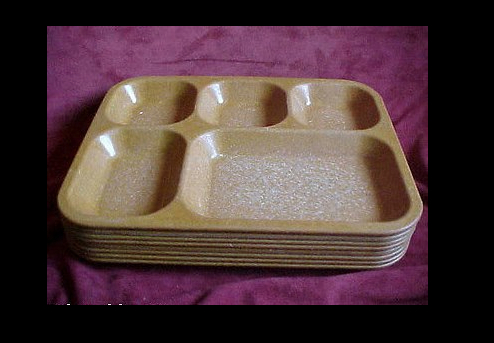
All the trays had to be passed down to the end of the table where the Assistant Commandant sat while the two “gunners” on either side of him scraped all the food, which had been barely touched, into a big pile on one of the trays. That was the end of that “meal”. It was worth it, though, to see one of my contemporaries finally stand up to a middle classman.


I don’t know what happened to Candidate Curley. I’d imagine he did a lot of pushups after that. I assume he graduated with his class and eventually became Lieutenant Curley. I hope if he was sent to Vietnam, he made it back in one piece, and lived to be a happy old man with six grandchildren to whom he could tell that story. 

I don’t know if he died in the Vietnam War a hero. All I know is, that day, he was my hero.

Stan Lee Calls Me From California

Screen shot 2014-09-07 at 11.14.09 AM

From the time I was very young and long before I learned to read, I was fascinated by the art in children’s books and comic strips and soon realized I could draw my own pictures.

Every chance I could get, which was actually quite often, I would take a pencil and the cardboard reinforcement from one of my father’s recently-laundered shirts and sneak down the hall undetected into the dining room and sit down all alone at the dining room table.

Then I would silently slip away, escaping my own mundane boyhood existence, down through my arm and out through the tips of my fingers and out the point of the pencil, onto the paper and into the magical world of my own imagination, often in the company of a character I returned to time and again. I called him Ghost Diver.

Someone, or perhaps something, had long ago cut Ghost Diver’s still-bubbling air hose, but his skeletal face and bulging eyeballs were clearly visible through the thick plate glass of his big brass diving helmet. A rip in his canvas diving suit, revealing his ribs, had, no doubt, been occasioned by an unfortunate encounter which ended badly at the end of his diving knife or the tip of his spear gun for a Great White Shark or perhaps a hungry Barracuda. His bony ribs made a nice artistic counterpart to the rotting barnacle-encrusted timbers of the unnamed sunken vessel that Ghost Diver was perpetually exploring.

In all the drawings I ever did of him, he never got any closer than a few yards to any of the many treasure chests of jewelry and gold coins that were always conveniently open and beckoning to him as he went about his watery labors.

A quarter of a century later I would find myself employed full-time on staff at Marvel Comics as a letterer. I had done quite a bit of drawing up to that point in my life, but after seeing some of the artwork that was in and out of the office everyday, I’ll admit I was a bit intimidated. So I kept the fact that I could draw a secret. I wasn’t ready to show anyone in the office my artwork, because I knew it wasn’t good enough and I certainly didn’t need them to tell me what I already knew.

But there are some things which cannot be contained and there are some secrets which, given the passage of enough time, will always be revealed.

Such was the case with me.

One day, a half dozen years after I had begun working day and night at Marvel, I began doing a cartoon strip after hours based on a stick figure. I called him “Stick-Man.” I then made photocopies on Marvel’s photocopier and taped the comic strips to the doors and windows of offices in the editorial department and production department. I did not use my own name, because if anyone said anything unkind about the comic strips, I didn’t want it to coming back to me. “Skully” would have to take the criticism. Good luck finding him.

To my surprise, they were a big hit with my co-workers. People seemed to like them. Maybe there was some hope for a guy who couldn’t draw superheroes, after all.

For a guy like me a little encouragement went a long way. Unfortunately, so did a little discouragement, but, with experience, you learn to trust your own instincts about whether your work is any good or not. A little encouragement was all I needed it seemed. Soon people were coming into the office in the morning and were actually disappointed if there wasn’t a Stick-Man Cartoon on their door. They weren’t disappointed too often and in a few weeks I even got a card in the mail from Stan Lee with his own version of Stick-Man. One nice thing about a stick-figure is that everyone can draw it and the folks at Marvel had a lot of fun with it. After a few months, I was feeling so good about it, I even went up to King Features Newspaper Syndicate with the strips and showed them to the editor in chief, Jay Kennedy. He seemed amused by it and by me and asked if I really thought I could sustain a character with no face and who didn’t even talk for ten years. He explained that he wanted a ten-year commitment from the artist. I had to admit that gave me pause. I have never been the type of person who could sustain anything to do with art for ten days much less ten years.

But my secret was out.

I could draw and I could make people laugh. Soon people in the office wanted my cartoon strip in their comics and with a little encouragement from one of the editors at Marvel, I produced a Stick-Man Calendar for 1984. I will always be indebted to Jim Salicrup for that vote of confidence. We printed up a hundred copies and I gave one to everyone in the office.

Years passed and I did more and more off-beat stuff that people seemed to like. I was getting art assignments for comic strips, five-pagers and covers and I even did a humor book that sold a ton of copies. I was on a roll, as they say. Or maybe it was a bagel.

One day the phone rang in my studio, which, in those days was by no means an unusual event. My new girlfriend answered it. “Rick—it’s Stan Lee ….”

I thought I had finally arrived. Stan Lee, himself was on the phone and he wanted to talk to me about collaborating with him on a special project. It seems he was going to be meeting with the Heavyweight Champion of the Boxing World, Mike Tyson and Stan wanted me to do a special cartoon which would feature the Hulk and Mike Tyson and have Stan as the referee. Stan would be saying a bunch of stuff and I would also letter that in a big balloon over their heads. The original artwork would be presented to Mike from Stan during that meeting.

Stan could have called practically any artist in the world and they would have eagerly accepted the assignment. But Stan didn’t call any artist.

He called me!

Of course I told Stan I’d be happy to do it. I was secretly very happy that my new girlfriend saw that I was the kind of artist who gets calls from Stan Lee. Stan never said anything about money, so I asked my girlfriend how much to charge for the drawing. She told me because it was Stan Lee, I should charge him at least $500. If I charged him less money maybe he would be insulted. He was an important person, a millionaire. He could afford to pay $500. And besides, it took me all day to do the cartoon. Maybe two days even. So I did the drawing and sent it to California along with an invoice. In a week or so, I received payment by check. And I never heard a word more about it. And Stan never called me again with any more art assignments. I was pretty busy with work, so I didn’t lose too much sleep over it, although I’ll admit to being a little let down.

A couple of years later, at the San Diego Comics Convention, I happened to be on a bus from my hotel to the convention center. I was the artist of Beavis and Butt-Head Comic Book at the time, which was very popular. Two seats directly in front of me were empty and two men were getting on the bus and were going to sit in those seats. I realized that one of the men was Stan Lee. It had been a couple of years since I had done the drawing for him.

I stood up and introduced myself,

“Hi Stan! Do you remember me? I’m Rick Parker….”

Stan shook my hand and smiled.

“Yes, sure!! I remember you!

“You’re the guy who charged me $500 bucks for that cartoon!”

Death by Candy

Screen shot 2014-09-06 at 7.31.52 AM

It turned out that arriving at Officer Candidate School two days early was not such a smart idea.

 
The few of us who made that mistake were immediately set upon by middle classmen–officer candidates who were in their 8th to 15th week of what was supposed to be a 23-week training period. Although for me it would be a month longer.

Some poor unfortunate slob whose name I never knew, had arrived before me and had been found to have included, among his personal belongings, a giant, 1-lb. bag of M&M’s.

 
When I first saw him, he was already lying on his back in the doorway of the barracks with the pointy end a makeshift white paper funnel in his mouth. One of the middle classman had filled it up to the top with green, red, orange, yellow, brown and blue m&m’s and commanded him to, 
 
“CHEW, candy-date!!”
 
Then that same sadistic middle-classman handed me the bag– and told me to keep re-filling the funnel, until he had eaten each and every last “m”. Upon entering the service, I had sworn to “follow all lawful orders.” This was the first time I had to think about it.

I don’t know who the victim was, I made no mental note at the time to remember his face, and would not have recognized him the next time I saw him, which would probably have been later that day– and probably every day– for the next six months.

 
He was just another officer candidate. We were all brand new. No one knew anyone. We were all strangers, bound together in a crazy, intense “experience” that would last only half a year, but one we would all remember for the rest of our lives. 

I doubt that candidate ever ate another m&m. I know I have never eaten an m&m when I didn’t think of that candidate. 

It was ironic, in a way, because for most of the next six months we officer “candy-dates” practically lived on candy, or “grotto” as we called it.

 
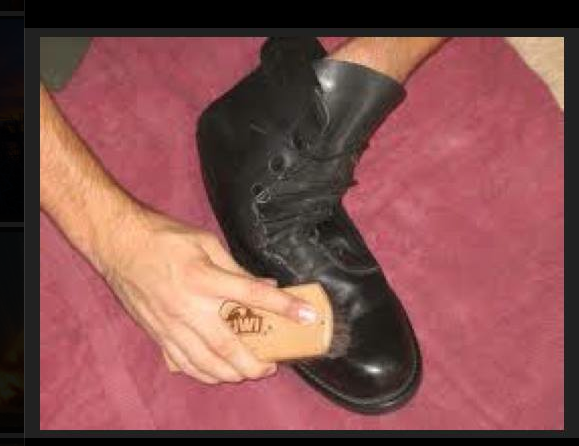
In the evenings, when most of us, dressed for bed in our olive-drab boxer shorts and matching tank top, were down on our hands and knees with white towels—wiping and polishing the red linoleum floors to a mirror-like shine (we were not allowed to walk on the floors, but hopped from place to place on our tiptoes across footlockers)– others were cleaning the latrine, polishing the brass on the spigots of the white porcelain sinks, while still others were engaged in polishing the toilets.
One lone “candy-date” would be designated “grotto NCO”. That was me.

It was my job to make the rounds between my fellow candidates, who were all busily engaged in cleaning the barracks and my job to write down their candy order on a slip of paper and collect all their nickels, dimes and quarters. A candy bar cost ten cents in the 1960’s.
 
Then, with a pillowcase to carry the coins in and to carry the candy back in, I, the “grotto NCO” would be hastily dispatched to a small wooden building a few hundred yards away, which contained a number of vending machines dispensing Baby Ruth, Fifth Avenue, Snickers, Oh Henry, Butterfinger, Zero, Mounds, Almond Joy, Mr. Goodbar, Clarke’s, Hershey Bars (with or without almonds) and of course small bags of m&m’s.
 
There was plenty of great food in the mess hall, we just couldn’t eat it. We were too busy being harassed by the middle and upperclassmen. 

One bright early September morning , after cleaning the barracks for daily inspection and daily PT (Physical Training) we were marched to the mess hall as usual. 

 
Streaming in at a rapid pace, we took our places on either side of the long wooden tables, each candidate with his eyes glued onto the nametag of the officer candidate directly across from him.
 
At one end of the table was the “table commandant” a middle-classman, whose job it was to enforce strict OCS table etiquette.
 
At the opposite end of the table, was the “assistant commandant” whose job it was to enforce strict discipline at his end of the table and to assist the table commandant in making every officer candidate’s life miserable during mealtime.

At all times, you must sit bolt upright on the front four inches of your chair, your eyes fixed on the nametag of the officer candidate directly across from you.

 
Any hand not actually engaged in the act of holding a knife or fork must be kept in your lap, under the table. Once the food was passed around to the table commandant and then to the assistant commandant, at the opposite end of the table, the candidates passed the food around the table to each other.
 
 
Once the table commandant observed that everyone had food on his plate, he gave the order to “begin eating.” 

Each candidate was allowed to seize a piece of food no larger than his own thumbnail, and with his right hand, stick his fork in it , and with his left hand, simultaneously place his knife on the upper left-hand corner of his tray with the blade facing in, replace his left hand in his lap, replace the fork on the upper left corner of his tray, put his right hand back into his lap under the table and then begin chewing.

 
You were allowed three chews and then you had to swallow.
 
And they were counting. 

Many times it was hard to swallow something that small. Once in a while, a starving candidate, probably out of desperation, would take what was known as a “gross bite”. This would result in the TC shouting out,

 
“CANDIDATE THIRD ON MY RIGHT—- HIT A BRACE!!!
 
To which the offending candidate would immediately panic/drop his knife and fork, place both hands in his lap, sit bolt upright in his chair as if he were being electrocuted– and say quite loudly,
 
“SIR!! CANDIDATE CURLEY!!” (or whatever his last name was).
 
Then the TC would command, “SWALLOW, CANDIDATE……”
 
This was usually followed by the candidate making a series of small, strained, gurgling noises as he tried to swallow a tiny morsel of food on demand.

Any officer candidate whose eyes strayed would be called out for “dog-eyeing”.

 
All underclassmen at the table would immediately have to place their forks back on their tray in the upper right hand corner at a 45 degree angle and their knife on the upper left corner of their tray at a 45 degree angle with the blade facing in. 

I arrived at OCS on the 28th of August, 1966. The first time I was ever allowed to eat a meal like a “normal person” was on Thanksgiving Day of that same year, when a handful of us candidates, who had no place to go, and by default, remained on the grounds of OCS, were “casually” marched to the mess hall and then once inside, were allowed to sit wherever we wanted and eat whatever we wanted.

 
I was starving. 

That Thanksgiving, while other soldiers were fighting and dying in Vietnam, the mess hall at Fort Sill Artillery and Missile Officer Candidate SChool,  had been prepared as if two hundred people were expected.

 
About a dozen tables were all set up for a sumptuous Thanksgiving Day feast, complete with red tablecloth (the official color of the artillery). There was a large golden-brown roast turkey with all the trimmings set out on every table. There were big bowls of mashed potatoes, a gravy boat, fresh pears and peaches, platters of roast beef, ham, large bowls of fresh steaming vegetables, carrots, squash, corn, broccoli, candied yams, bread, butter, cranberry dressing with walnuts, a pitcher of water. Apple pies, cherry pies, sweet potato pies and pecan pies. 

There were only twelve of us, so we each sat down at our own table.

 
I have never been so hungry in my life.
 
All alone, I stuffed myself with a large plate of everything I could heap on it and ate it all unsupervised. In about eight minutes I was full. It’s amazing how quickly you lose interest in food once you have had enough of it. 

One morning in December, right before Christmas, we arrived for the morning meal and the table commandant said, “Candidates, bow your head for a moment of silent prayer.”

 
That was standard and after a moment was followed by, “God Bless our mothers and fathers and our fighting forces in Vietnam.” Occasionally they added, “….and all officer candidates.”

But this day was different.

 
After ordering us to bow our heads in a moment of “silent prayer”, he went on to add,
 
“One of your contemporaries choked to death on a candy bar last night.”
 
I felt sick at the thought of a starving kid lying flat on his back in his bunk after lights out, trying not to mess up his bunk, by actually sleeping in it, and trying to unwrap a candy bar and eat it without making any noise. 

That’s what we did every night, but none of us ever died doing it.

 
I was guiltily glad he wasn’t in my barracks. I found myself wondering what kind of candy bar it was, if perhaps it was m&m’s, and who he was.
 
I wondered if it was that guy I had met on my very first day. 

And then I wondered what they were going to tell his parents.


Then I thought what a terrible way for a young man to die for his country.


O.C.S. Officer Candidate School

Screen shot 2014-09-05 at 7.01.50 AM
After a month with the Holdover Platoon I finally received my orders. I was to report to the United States Army Field Artillery and Missile Officer Candidate School at Fort Sill, Oklahoma in only five days. I was elated. Finally here was my chance to redeem myself for flunking out of college and the consequent feelings of failure. If all went well, in six short months I would become a second lieutenant, an officer in the United States Army. It turned out to be the longest six months of my young life.

I decided to fly to Oklahoma by way of Savannah, Georgia, stopping there for just a day or two to see my mother, whose birthday was the day before mine at the end of August. The plane from Georgia to Texas was not air conditioned, still I was feeling pretty spiffy in my slightly-wrinkled and mildly-sweat stained khaki dress uniform by the time the plane touched down in Dallas. Changing to a smaller plane for the short flight to Lawton, Oklahoma, I found myself seated next to a lovely young girl who was returning home from visiting her grandparents. We chatted amiably, and I confess that I began thinking I would like to see her again, even though I had no idea when that might be, given the uncertain nature of my current assignment. Her father, a sergeant first class, a high-ranking enlisted man, greeted her warmly at the gate. He looked less happy to see me. She whispered something to him and the next thing I know he reluctantly invited me to catch a ride with them from the airport to the army base in his brand new 1967 gold Oldsmobile Toronado. I was arriving in style.

When he asked, I explained that I was to report to the artillery officer candidate school and he allowed as how he was “pretty sure” he knew where that was. In twenty minutes or so, we arrived in front of a drab yellow wooden building and I thanked them. Then that cute young girl and her Dad drove away in that fancy gold car with my duffel bag and all my worldly belongings, in their trunk and disappeared out of my life, forever, never to be seen again. 

Lightened of that burden, I went inside and met with the CQ (charge of quarters). He looked up, seemingly surprised to see me. He stopped reading his magazine, looked over my orders and then took me to draw sheets and blankets. I should have known, since the only two people who were at that place seemed to be the two of us, that it was probably not The United States Army Field Artillery and Missile Officer Candidate School. We both kind of realized I was at the wrong place at the same time, so I gave him back my sheets and blankets.

I have always been the type of person, who, when faced with a strange and unfamiliar situation, assumed that the “other” person knows better than I do. This can often lead to difficulties. 

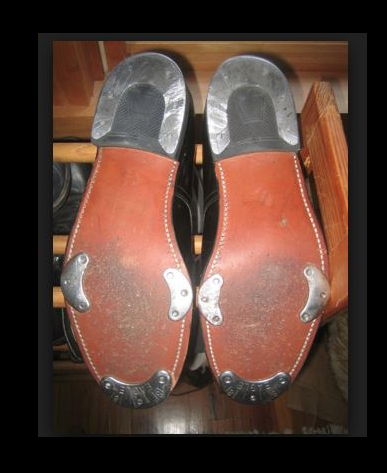
I wasn’t particularly worried about it, because I still was not required to report to OCS for another two days. I always leave room for mistakes. The CQ made a phone call, and in about ten minutes an army jeep arrived and drove me across the post to the United States Army Field Artillery Officer Candidate School. Sitting in the front seat of the army jeep with the air rushing by felt good on that hot August day and I was enjoying having my own driver and feeling somewhat flattered by the special treatment I was getting. I wondered if this was what it would be like all the time after I became an officer. In about eight minutes we were there. There was no doubt about it this time. There was a great big sign. The jeep drove away and I walked under the big arched iron gate with the letters on it and sauntered onto the grounds of OCS. Someone about fifty yards away was walking rapidly toward me. His shoes made a clicking sound, like the sound of a horse’s hooves on a cobblestone street. It got louder and louder. It was another officer candidate, an upperclassman. He did not look happy to see me. This was not the type of welcome I had been expecting. Suddenly the clicking stopped. He was right in my face and speaking to me in a most unpleasant manner. “What are YOU doing walking on my SIDEWALK, candidate??!” I stammered, “Wha–? ….where am I supposed to walk…?” 

“You’re NOT supposed to WALK, candidate! You’re supposed to RUN!” And NOT on MY sidewalk!!” 

I took off running on the gravel, like I knew where I was going. It felt oddly familiar.


Suddenly, I realized I’d been running all my life. 

Thankfully, he didn’t follow.

GETTING SWORN IN—— AND SWORN AT, 2/23/66

Screen shot 2014-09-04 at 7.15.19 PM

Soon a group of strangers were standing together in a room with our right hands raised, and after pledging to “defend the Constitution of the United States from all enemies foreign and domestic, and to obey the orders of the president of the United States and those officers appointed over us”, we stepped forward-— and into the United States Army.

There would be much forward-stepping and much marching after that. The first place we were marched was to get a haircut and to be issued our army uniforms. As a group of us stood outside, eager to defend the Constitution, a regular army sergeant asked if there was “anyone who had ever been in the army before”. I thought it was a strange question. But a slightly older-looking fellow, in front and off to my right said that he had. “Pop” Wyatt was put in charge of our small mob and immediately stepped forward and took his place in front facing us. 

“Ten– HUT!”, he said.

There was an almost imperceptible “straightening-up” of each slouching person in the formation. At the words,

“Fo—waaaad…..HARTCH!”, we began to move together as an organized mob off in one direction. After a few minutes, we came in sight of a small building where we would be getting our haircuts. 

“Hut…..two…..three…. four…..one…two….three….four…..” said our leader.

I had actually taken two years of R.O.T.C. in high school, so I wouldn’t have to take P.E. (physical education. i.e., “sports”, and therefore I would not be expected to take my clothes off in front of others in the gym). Consequently, I did have some experience marching in formation. I was just beginning to think,

“Hey—this isn’t so bad….”, I was really enjoying marching along with a group of other guys, actually beginning to experience a new-found sense of belonging– when sudddenly he ordered us to stop. 

“Muthafuckkas……..HALT!!” 

“Mother Fuckers???”

I had never heard THAT word before. It literally stopped me in my tracks. And, as a sickening feeling in the pit of my stomach quickly overtook me, I thought to myself, “Oh… my God…..what kind of people am I in here with?” 

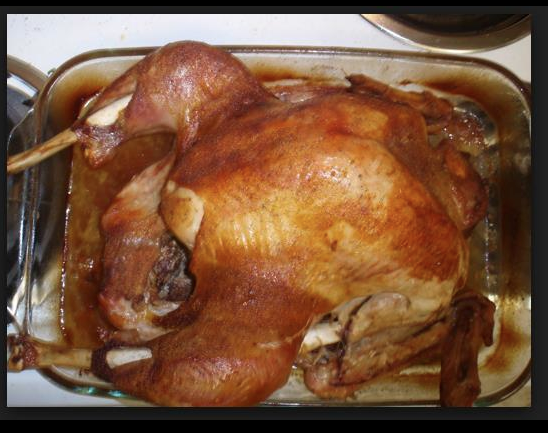
In just over two months, I would be back home on leave after basic training, and finding our Persian cat, “Blue” up on the kitchen counter, standing next to the freshly-baked turkey my mother had only recently removed from the oven, and set down to cool before serving, I turned to my Mom and inquired,

“What’s this fucking CAT doing up here on the stove….?”

Dicks and Peters

Screen shot 2014-09-04 at 7.19.16 AM

When I was a little boy everyone called me Ricky.

Ricky rhymes with icky, hickey, sicky, sticky, picky and a whole lot of other words that have negative connotations. I never liked the name Ricky.

When I got drafted into the army at 19, suddenly other people were calling me names I disliked even more. After about a year, I became a lieutenant and my commanding officer referred to me as Dick. I didn’t like that name either, but I wasn’t about to correct Captain O’Connell. So I became a Dick. By default.

After moving out of the Bachelor Officer’s Quarters, I rented a room from a nice older couple in town, Joe and Jewel Brooks. They called me Dick. They treated me like a son and cooked breakfast for me and took me to church with them on Sunday. One Sunday in church, I met a cute girl named Dee Deever. She had a cute name, too, so I asked her out. Dee worked as a telephone operator and I picked her up one day after work. She said, “Hi, Dick!!” I was embarrassed. It was like she could read my mind.

When I got out of the army and briefly moved back in with my parents, I didn’t want to be a Dick anymore– or a Ricky again, so I became a Rick. What few friends I had acquired up to that point in life went along with it.

Soon I was an art student and had delusions of grandeur as well as a fair amount of ambition. “Rick” seemed kind of informal. I didn’t know of any “real” artists named “Rick”.So I became a Richard. No one would take an artist named Rick’s work seriously. “Richard” was more formal and dignified. So for a while, although I produced most of what is arguably my best work, until I came to grips with the reality that I could not make a living as “Richard Parker” the fine artist, I was gradually becoming known among my friends and neighbors in New York as “Poor Richard”. To make a living, I went to work in comics. “Richard” seemed like a very pretentious name for a comic book artist.


So I became a Rick again. 

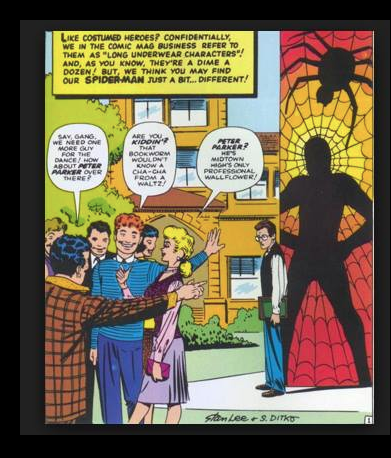
On my very first day of work I was sitting in the Marvel Bullpen lettering a Conan the Barbarian story. A few people who were in the office that day realized I was the new guy and one young fellow, Warren Storob, whom I later found out was a serious comics collector, stopped by my drawing table to introduce himself. We chatted amicably for a minute and then he asked me if I was related to Peter Parker.

“Who’s that?” I asked him. 

He just stood there staring at me. He had this look of incredulity on his face. I really didn’t understand what he was talking about, so I asked him to explain himself. He said, in a slow and deliberate voice as if he was talking to a mentally-retarded child: “Spider-Man’s… name… is….. PETER PARKER!

Oh,” I said. “Sorry, I’ve actually never read a Spider-Man comic book.

He just walked away shaking his head and muttered, “You don’t deserve to be working here….”

I never wanted to be a Dick and I’ll bet if Spider-Man had been a real person, he wouldn’t have wanted to be a Dick– or a Peter, either.

THE HOLDOVER PLATOON

Screen shot 2014-09-03 at 10.17.04 PM

After my eight weeks of A.I.T. (Advanced Infantry Training), I took a week’s leave in Savannah to visit my folks (remember, I didn’t have any friends) then reported back to Fort Jackson to await orders for Officer Candidate School. 

By now it was August. The days were long and the hills were steep and the air was hot. The area we were in was known as “Tank Hill”. I think that’s because by the time you double-timed to the top of it, and we did so several times each day, you felt like your body had been run over by a tank. 

They gave me three stripes, made me a “Buck Sergeant”–a D.I.–a drill Instructor– and put me in charge of “The Holdover Platoon”.

 
The Holdover Platoon was comprised of people (I think they were people) who were deemed unfit for military service for one reason or another and were awaiting orders to be mustered out of the service and released back into an unsuspecting civilian population. 

I doubt a more motley assortment of creeps, weirdoes and losers ever existed than those who made up The Holdover Platoon.

 
And I was in charge of all 19 of them. 

But they were MY creeps, MY weirdoes and MY losers. We all bunked together in one barracks. One of them, from New York, I believe, kept me up half the night trying to convince me that the popular singer, Dionne Warwick was actually a man. I was predisposed to believe that people from New York were to be taken seriously, but there was something unpersuasive about his argument. I began to think that maybe what it was about that he wanted to be a woman. Anyway, in a few days he was gone and someone else took his place. Someone who was strange in a different way.

 
My immediate superior was Staff Sergeant King, who appeared every morning to inspect the barracks while my creeps, weirdoes and losers were in the mess hall, presumably eating and probably making a mess of it like they did everything else. 

Staff Sergeant King was a real sergeant, not an “Acting Jack”, like me, a real “D.I.” a “Drill Instructor,” a big black man in a Smokey The Bear Hat with a “take-no-prisoners” attitude. A tall, strong, physically fit specimen with six or seven years service and another 23 to go. He was not inclined to smoke and joke, but was “strack” or strickly business. 

With a clipboard in my trembling hand, I followed Sgt. King around the barracks and “took names” while Sgt. King “kicked ass.”

 
Kicking ass meant that he would inspect each soldier’s area in turn, opening footlockers and wall lockers and dropping a dime on each bunk to see if it bounced high enough. If it didn’t, I wrote down the offending soldier’s name while Sergeant King reached down with one hand and grabbed the blankets, sheets and mattress in his giant fist and pulled everything off onto the floor with one smooth motion. With the other hand he was constantly engaged in overturning wall lockers in which he had detected that someone had hung a wet towel–or perhaps hung their field jacket facing the wrong way on a wooden coat hangar. 

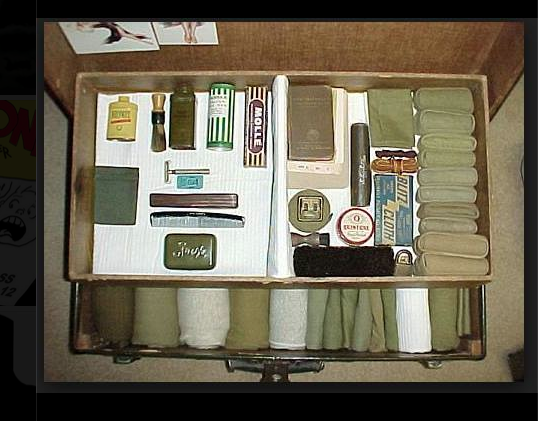
The footlockers were always left open for inspection– and if, for example, a soldier’s socks were not rolled up exactly right, I wrote that down.

 
If Sgt. King found the open hasp on the padlock was facing the wrong way, I wrote that down.
 
But were Sgt. King to find someone’s razor with hair on it, he would literally “go ballistic”and start cursing as if someone had killed his mother.
 
Seizing the footlocker by the handles, he would turn it upside-down in the middle of the floor sending cans of shaving cream rolling the length of the barracks while I quietly stood there with my clipboard writing it all down.

On one occasion, he found someone’s can of Barbasol shaving cream vertical in the footlocker when it was supposed to be horizontal or “lying down” in the footlocker. Sgt. King knew just how to deal with this type of infraction. He removed the cap to the shaving cream and closed the lid back down tight on the footlocker. Because of the height of the can, the lid of the footlocker closed with exactly enough pressure to discharge the entire contents of the aerosol can of shaving cream out into the closed footlocker.

 
When the inspection was over it literally looked worse than if a tornado had gone through the barracks. 

Then Sgt. King went away, to God knows where, after ordering me to march the Holdover Platoon back from the mess hall, using my loud commanding voice– and supervise the clean up of the barracks.

 
Although the Holdover Platoon didn’t really have any official duties to speak of, and although most of them would be out of the army in a month or so anyway, the demoralizing effect Sgt. King’s actions had on the members of the Holdover Platoon cannot be over exaggerated. Civilian life must have seemed like a vacation after what they had experienced in the army.

Many of these soldiers were hanging onto sanity with only three fingers as it was, and it fell to me to cheer them up, to encourage them, to motivate them, and to get the barracks back in order– so Sgt. King could do it all over again the following day.


A.I.T.

Screen shot 2014-09-03 at 2.06.32 PM

By the end of May, I was back at Fort Jackson for eight weeks of A.I.T. (Advanced Infantry Training).

The Infantry is known as “The Queen of Battle” and it’s the infantry that is usually on the front lines in any war. The Infantry is the “boots on the ground” of whom our government leaders often speak. They’re usually the first to go into any hostile environment and the last to leave. Consequently, they suffer the greatest casualties.

If you want to die a hero, join the infantry.

The weather had improved mightily since my previous stint at Fort Jackson in February and under the careful direction of some experienced combat veterans, we new recruits quickly set about familiarizing ourselves with the Infantry’s small arms arsenal. 

On a typical day that summer, about sixty of us future officer candidates would be seated on the ground or in this instance, in bleacher seats, similar to those in a small town high school football stadium, while a staff sergeant, wearing the Combat Infantryman’s Badge (an experienced veteran of an actual war) would instruct us on the finer points of each Weapon-of–the-Day. After each lecture, an expert marksman on that particular weapon would be called forward to demonstrate each weapon’s accuracy and effective range. I was most impressed by the M-60 machine gun.

…the M60 is a gas-operated, air-cooled, belt-fed, automatic machine gun that fires from the open-bolt position and is chambered for the 7.62 mm NATO cartridge. Ammunition is usually fed into the weapon from a 100-round bandolier containing a disintegrating, metallic split-link belt….”

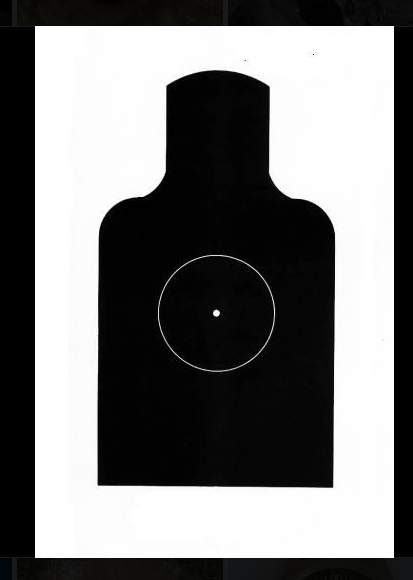
A series of white cut-out targets about 36 inches high, roughly in the shape of a human being and each with a black bulls-eye in the “chest” region, had been set up in the field before us. On an order from the NCO (non-commissioned officer) a two-man crew consisting of gunner and an assistant gunner jogged out from the side, carrying the weapon, which had a small tripod attached to the front of the barrel. The two men dropped to the ground behind the weapon and lay there awaiting orders to fire. 

The first target lay flat on the ground at a mere 100 meters distance. On a signal from our instructor, it popped up. No sooner had we seen it pop up, than it was falling back over again with a hole in its center of mass. One round from the machine gun sufficed to drop it about a second later.

Then the sergeant called for the target at 200 meters. And there it was. As quickly as it popped up—just as quickly, the M-60 made a single pop and in about a second and a half the 200 meter target fell silently back, the victim of the second bullet from the M-60. 

Then it got really interesting. 

The sergeant called for the target at 500 meters to be erected. Every man eagerly trained his eyes on the distant horizon and in a second or two a slight white speck appeared off to the left. A short burst of three rounds took it down. I looked around at my fellow trainees. Everyone was now clearly enjoying the show.

Then the sergeant called for a target at 1,000 meters. I looked to the front and squinted– but all I could see were gently rolling hills dotted with some small scrub brush– and way off in the distance some dark grey trees. At least, I think they were trees. They could have been clouds. Then, as I vainly scanned the horizon for the distant target, out of the corner of my eye, I thought I detected some tiny movement. Yes, there was indeed something white out there that hadn’t been there a second before. I could no longer discern the familiar shape of a human form, but down on the ground in front of us, what was clearly a human form shifted his body slightly and squeezed off a burst of five. There was a delay of about three seconds before the target rolled over backwards just as silently as it had arched up. I was impressed. Everyone was impressed. Except maybe our instructor, who had seen it all in training, so many times before– and no doubt, even seen it kill.

The sergeant dismissed the two-man machine gun crew and they jumped up and trotted off with the weapon. I felt like applauding, but it just didn’t seem right somehow.

Later in the afternoon, we had been split up into small groups and were inside a building, standing at a big table practicing disassembling and re-assembling the M60 when a low-ranking enlisted man, a clerk carrying a clipboard, appeared in our midst.

Anyone here ever had any math?”, he asked.

I wondered if flunking out of college after only one year with a 43 average in math counted for anything. 

I spoke up.

“I had two years in college!”

He wrote down my name and my service number, US 53417848, and went away. Apparently, he needed to fill a quota of just two candidates to send to the United States Army Field Artillery and Missile Officer Candidate School. Artillery, the “King of Battle” uses trigonometry to accurately “put his balls where the queen wants them”. All the rest went to Infantry Officer Candidate School at Fort Benning in Columbus, Georgia to become platoon leaders in Infantry Companies in Vietnam. 

And so it was, that math, cursed and blessed math, which had caused me to get drafted into the army in the first place, would prove my salvation… and save my lying ass.

The Difference Between a Tank and a Cadillac

Screen shot 2014-09-03 at 9.22.31 AM

I went back to Fort Stewart after basic training and began A.I.T. (advanced individualized training) in armor, while awaiting orders for officer candidate school.
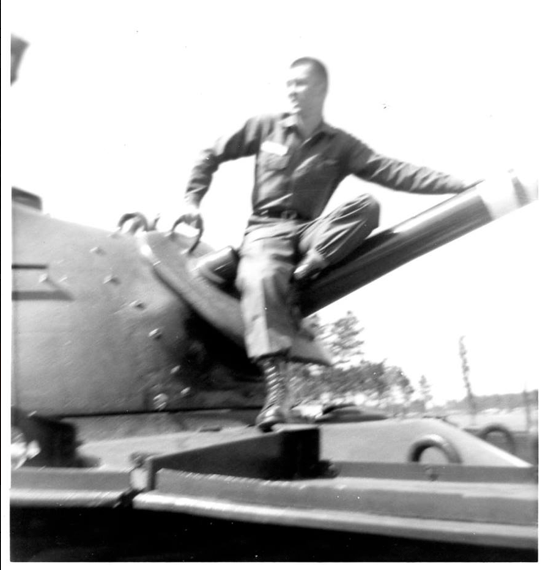
Armor means tanks, and since I had finally been permitted to learn to drive my mother’s 1959 Cadillac, just a year before, I felt perfectly comfortable behind the wheel of a M48A1 Patton tank.
Technically, a tank doesn’t actually have a steering wheel but is operated by means of two pedals about a foot tall and ten inches wide and two big levers, one for each hand. The right pedal, if it can be called that, for it is more of a large metal plate akin to a skillet, is for the diesel fuel and the left pedal is for the brake.
It takes two hands and two feet to drive a tank.
The two levers operate the treads. When you pull back on the left lever with your left arm, it locks the left tread, but not the right tread, so the tank moves toward the left. When you pull back on the right lever with your right hand, it locks the right tread and the tank starts to move to the right.
Both levers are spring-loaded and the tank moves straight ahead if one or the other of the levers is not engaged.
The driver of a tank is seated in a metal seat with some padding, fortunately, way down in front and off center to the right of the tank as you are facing it. When the hatch is open, the top of the driver’s head clears enough of the body of the tank to have an unobstructed view of the road– or path– the tank takes. Small trees, scrub brush, boulders, ditches, small ponds, military vehicles and buildings of various sizes do not qualify as obstructions to a tank. Top speed is about 50 miles per hour and the tank weighs about 40 tons. Tanks do not stop on a dime. Or a quarter.

If I remember correctly, a 4-man tank crew consists of a tank commander, an assistant commander to operate the .50 caliber machine gun and to help load the ammunition, a gunner to fire the cannon, and a driver to keep the tank moving. It’s important to keep a tank moving because a tank is a big target— and it’s harder to hit a moving target. You don’t want to get hit by hostile enemy fire, even if you’re in a tank–and especially if you’re in a tank– because of what’s called “spalling”—that’s when an enemy projectile of one sort or another strikes the outside of the tank causing the metal parts inside the tank to break off and ricochet around inside the tank killing the crew.
Also, you are subject to being burned alive inside the tank by “Cherry-Juice”, or hydraulic fluid that could spew out were the tank to be hit in certain vulnerable places by enemy fire.

When I heard this, any sense of security I had regarding tanks quickly evaporated.

If the hatch is closed, the driver “sees” through a series of periscopes and has the added “advantage” of having a radio headset built into his helmet, so that the tank commander, who presumably has a better view of things, can issue orders. Having a TC yelling at you, over the rumble of the treads, as you hurtle through space at 40 miles an hour, at night, while peering at the road ahead through a periscope is the ultimate “backseat driver” experience.

I know, because it happened to me.

We were doing night-exercises. My only instructions were to follow the tank in front of me. Seemed simple enough. But I have never been especially good at following simple instructions.

I was to keep my eye on the dual tail lights of the leading tank.
As long as I could see the two tail lights as distinct, separate lights, I was the right distance from him.

If on the other hand, I fell too far behind when following, then the tail lights would appear as a single red light and I was to speed up. This was important, because there would be other tanks following me. You want to stay together, especially at night. It gets dark out there and, besides, there are no rear-view mirrors on a tank.

We rumbled off into the darkness– and for a while anyway, things seemed fine.

I peered through my periscope with my feet on the pedals and my hands on the levers. I could see the two lights of the tank in front of me quite distinctly. I have always been prone to daydreaming. I’m easily distracted and I confess, I don’t remember exactly what I was thinking about as we lumbered down the road that night at 40 miles an hour, but I do remember that suddenly the two little red lights in front of me seemed as one.
The next thing I knew, I was receiving orders from the TC over my headset. I couldn’t quite make out what he was saying, due to all the noise of the treads and the static of the radio, but somehow, I knew he was talking to me. It sounded like, “….ERWAA-DIZZGUT-AHHREAAA!”
I wasn’t quite sure how to respond, so I eased up on the gas pedal thinking that with less engine noise and tread noise I would be able to understand him better. I also spoke to him over my headset.
“Say again….?”
To which he repeated whatever it was that he had said before: ““….ERWAA-DIZZGUT-AHHREAAA!!!!”—but in an even louder and more urgent tone this time.
I still didn’t understand what he was trying to tell me.
While I was trying to figure out what to do next, I became acutely aware of someone approaching from behind. It was the TC. He had left his position up in the turret and climbed down to where I was in the front of the tank. He grabbed me by the right shoulder and said in plain English,

“You’re too far away from the other tank”. Well, that’s not exactly what he said, but you get the idea.

Shortly after that, I was transferred out of the tank corps and sent back to Fort Jackson where I started over again in Advanced Infantry Training. I didn’t really mind, though, as I thought I would be a smaller target as an infantryman than I had been as a tanker. I did miss driving that tank, though.

You can’t mow down trees in a Cadillac.