All posts by richardlowellparker

Rick Parker is an American artist, cartoonist, and humor writer well known in the comics world as the artist of MTV's Beavis and Butt-Head Comic Book (published by Marvel Entertainment 1994-1996). He is also the writer and artist of the self-published graphic novel, "Deadboy", as well as being the illustrator of the Papercutz Slices parody series of graphic novels, "Diary of a Stinky Dead Kid", "Harry Potty and the Deathly Boring", "breaking down", (a Twilight parody), "Percy Jerkson and the Ovolactovegetarians", "The Hunger Pains", and "The Farting Dead". Rick Parker was one of the four artists of The Pekar Project, which brought new original illustrated stories of autobiographical comics pioneer, Harvey Pekar to the web in 2009-2010. His graphic novel, "DRAFTED" about his time in the Army during the Vietnam War will be published Abrams Comicarts in the near future. Rick Parker resides in Maine with his family where he draws cartoons, teaches cartooning and writes this blog.

The Joker

bill-in-drag150Although I am not really the kind of person to play practical jokes on other people, I will admit that, to an extent, I do like messing with people’s minds.

Looking back through the haze of time, I think that some of the best artwork I ever did, in the mid 1970’s, before I began to focus on comics as a means of creative self-expression, played with people’s perceptions of reality. In a sense, it could have been written in some art magazine (although it wasn’t), that my artwork in those days challenged viewers to not just look at my work but to think about it. I began with the perhaps erroneous assumption that human beings have an innate desire to make sense out of the world, to understand what they are experiencing. For years, I had created these three-dimensional concoctions or “assembledges” as I called them, by selecting, then carefully modifying ordinary or found objects and combining them or incorporating them with others into a new context. This essentially constitued my artwork in those long-lost days.

Flash forward forty years.

Today, as I was on my way home from getting the oil changed in the station wagon, I decided to stop into the grocery store for a few items.  A few minutes later, as I was walking back to my car through the large parking lot and reaching into my pocket for my car keys, I noticed my wife’s car, a blue VW beetle, parked on the other side of the parking lot. Apparently, she had decided to go shopping as well, and since the store is large, somehow, we had missed each other.

As I was getting ready to push the button on the key ring that unlocks the door of my station wagon, I realized I had the extra set of keys to the VW in my hand.

Then I got an idea.

Walking over to her car, I unlocked it, got in, started the engine, and drove it about ten feet to an adjacent parking spot and in the process, turned it around and faced it in the opposite direction.

“Won’t she be surprised and maybe a little intrigued when she comes out and the car is in a different spot?”, I mused.

Then I got out, went back to my car and drove it to another parking spot some distance away and sat there waiting for her to come out of the store with a shopping cart full of groceries, so that I could surrepticiously observe her befuddlement upon discovering that her car was not where she left it but in another spot.

After a considerable time had passed and she still had not appeared on the scene, I decided to go home and wait for her there.

As I was pulling into the driveway at home, I suddenly remembered that my father had once played a joke on my mother. I wondered if there is a genetic component to joking.

They had been married for two or three years when the event which I will endeavor to describe ocurred.

It was during World War Two, in the days in which most people still traveled by rail. My mother, who was around 24 at the time, had made plans to leave Savannah on the overnight train to visit her older sister in New York City for a week. She got all dressed up, put on a big hat with a wide brim and a feather in it and my father drove her to the Union Station Railroad Passenger Terminal in Savannah. People dressed well in those days when they were traveling.

My father helped her on board and then went back outside onto the platform and, ever the dutiful husband, waved at her and blew her a kiss as she sat in her seat looking out the window at him as the train pulled slowly out of the station.

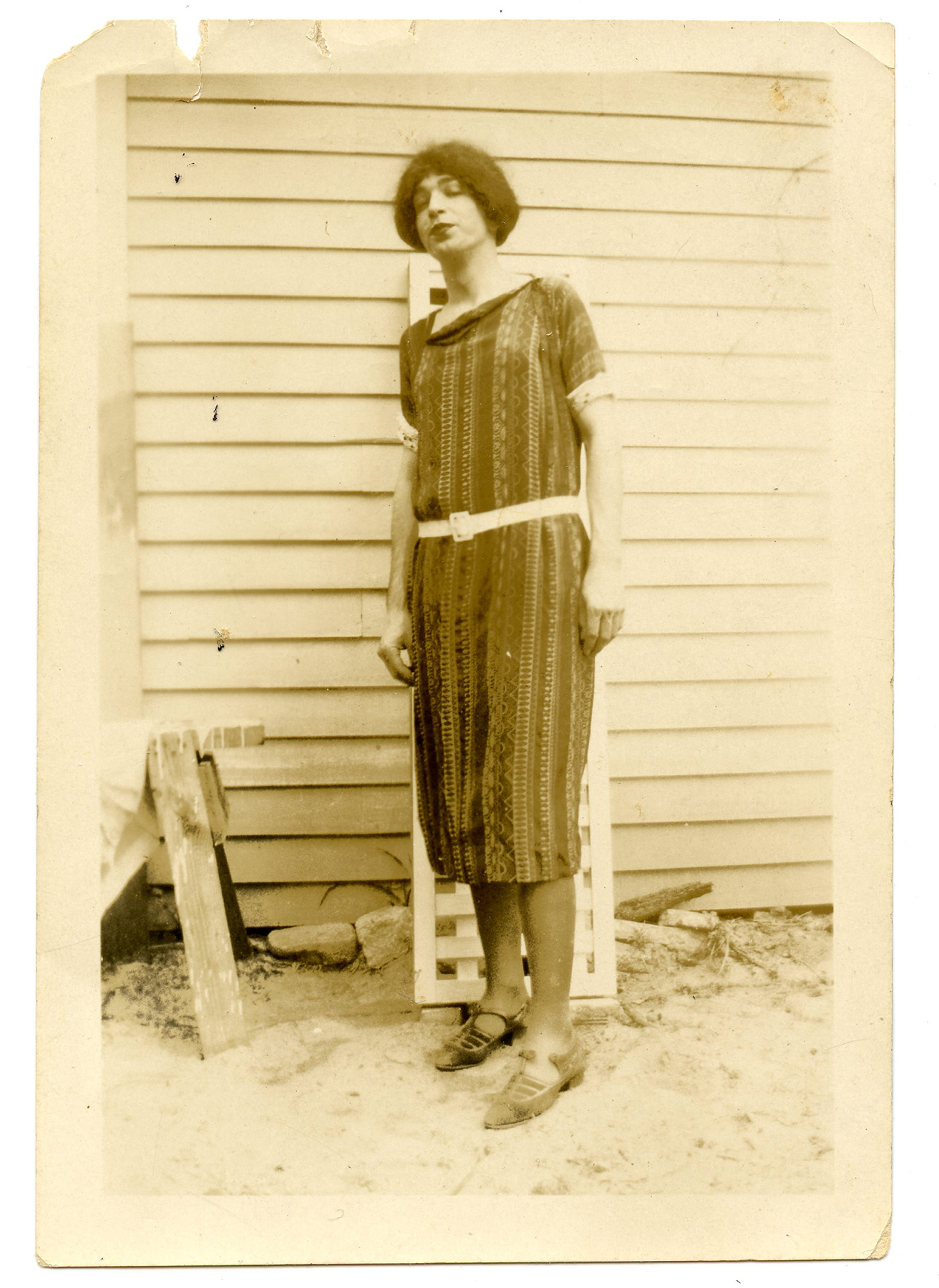
Then my father hopped back in his car and drove to the airport and flew to New York City and stayed overnight at a hotel. The next morning when my mother’s train pulled into the Old Pennsylvania Station my mother’s older sister was there to meet her. Accompanying my aunt was a strange woman in a long dark blue dress and high heels and stockings and wearing lipstick and a big floppy hat with a mourning veil in front.  That woman was my father.

“Hello, Bill….” said my mother, having recognized him almost immediately through tired eyes which had opened and closed many times throughout the night as she sat in her seat in coach, trying to sleep or looking out the window at dark little farmhouses passing in the countryside each with a yellow light on in the window, or watching wearily as men and women, strangers in heavy coats, with suitcases and unidentified things in bundles got on and off the train, and brushed by her seat in the middle of the night and early hours of the morning in places like Charlotte, Raliegh, and Washington, D.C.

My mother was not the type to be easily amused and was not amused then.

But she was not my mother then.

If anyone ever came close to amusing her it was probably me.

(Epilogue)

Oh–!  What was my wife’s reaction?, you may be wondering.

“Did you play a trick on me?” she wanted to know as she pulled into our driveway and proceeded to unload a carload of groceries. She said she had purposely parked the car near where the shopping carts are stored but then when she was returning the cart, it seemed further away and made her question her own sanity.

Maybe every now and then we should all be made to question our own sanity. Perhaps facilitating the process of people questioning their own sanity is my little gift to the world.

Looking Up

Grayson.Sky480

By November of 1999 I had been on the planet for fifty-three years.

As it happened, I was taking my wife and two children by car from New Jersey to Savannah, Georgia to spend Thanksgiving with my parents. After driving several hundred miles, we  stopped for the night at a motel in North Carolina.

Our oldest child had just tuned six and our youngest was three. In those days they both still did what I told them.

The next morning, the very first thing I told them to do was to get up out of bed at four o’clock, (well before the sun came up) and come get in the car with me so I could drive them down the road to a deserted spot I had picked out fifteen minutes earlier, by a farmer’s field while they still lay sleeping. Then I gently coaxed my wife and those two little sleepy-heads out of the car and told them to look up at the sky. I told them I wanted them to see something wondrous and magnificent. It was something that I had seen thirty-three years earlier when I was in the army. And I will never forget what I saw. And I trust they won’t either.

Thirty-three years earlier, I had been on guard duty at The United States Army Field Artillery and Missile Officer Candidate School at Fort Sill, Oklahoma when I had first seen it. I don’t think I was ever on guard duty more than two or three times during the whole time I was in the army. But late in the afternoon of November 16, 1966 it was my turn to be on guard duty whether I liked it or not and there wasn’t a damn thing I could do about it.

So I reluctantly left the confines of Golf Battery and the comfort and camaraderie and the familiar faces of my contemporaries and reported to the Charge of Quarters to draw my weapon and take my turn at guard duty. Guard duty was two hours on and four hours off and I was told by the CQ that my first shift would be from eight to ten. “Two…four… eight… ten…on…off”, I was never any good at math and the whole thing sounded confusing and a little contradictory to me. But I nodded as if I understood, and repaired to a lower bunk in the Guardhouse to relax on an olive drab blanket and shine my boots and study the little white card with the General Orders on it and otherwise prepare for my shift a couple of hours later.

Shortly before 8 that evening, along with four or five other officer candidates from batteries other than my own, and none of whom I recognized, we stood at attention to be inspected by the Sergeant of The Guard–a middle classman, our M-14 rifles by our sides.

And suddenly, there he was, standing eye-to-eye with the contemporary to my left after glancing briefly at my contemporary’s name tag. My contemporary had automatically raised his rifle to “Inspection Arms” when the S.O.G. did a right face in front of him. Grabbing my contemporary’s rifle out of his hands with his right hand and inserting his thumb into the receiver, he went through the motions of looking down the muzzle of the rifle in order to ascertain the state of dust on the lands and grooves although it was a moonless night and far too dark to see any moonlight, even if there had been any, reflecting off his or anyone else’s thumbnail– much less any dust in the barrel. While thus engaged, he simultaneously shouted into my contemporary’s face.

“Candidate Zilch–What’s your first general order?”, he demanded to know, although he already knew the answer to his own question.

“Sir, Candidate Zilch. My first general order is: I will guard everything within the limits of my post and quit my post only when properly relieved, Sir!”

The Sergeant of the Guard then handed Candidate Zilch back his rifle and did a left face and took one step and then executed a right face, which brought him directly in front of me.

Being brought up to be the polite sort and instructed never to stare and not wanting to look him or anyone else directly in the eyes, I focused my gaze upon a tiny spot slightly to the right of where his right eyebrow began as it arched upward and then aggressively to the right.

Just as I was trying to decide what the peculiar smell on his breath was corn on the cob or a Hostess Twinkie, he suddenly grabbed the rifle out of my hands and holding it in his and glancing at it, he directed his speech through my head and seemingly back toward someone with my name who must have been standing a considerable distance behind me. For a moment I wondered who he was talking to.

“Candidate Parker, what is your eleventh General Order?”

There was no answer.

Then, a few seconds later, and now, with no doubt in my military mind that it was my turn to speak (I have never had a problem speaking– even out of turn)–I shot back, “Sir–Candidate Parker! My eleventh General Order is  “To be especially watchful at night and during the time for challenging, to challenge all persons on or near my post, and to allow no one to pass without proper authority…..” After two or three seconds had passed, I added, “SIR!”

I wasn’t exactly sure what constituted “proper authority” but I figured I would cross that bridge when I came to it.

But I didn’t dare tell him that.

In due course, I was marched a few hundred yards into an area containing a network of abandoned two-story wooden buildings where I was soon abandoned to spend the next two hours of my life, such as it was, deliberately marching up and down with my rifle at right shoulder arms and my neck stretched, my head held high and my eyes fixed straight in front of me. I was convinced that the SOG was watching every move I made. As I marched up to the steps and to the door of every empty building, my shoulders were thrown back and my backbone was straight and if a crowd of my relatives or a small contingent of my grandmother’s friends from The Daughters of the American Revolution had been watching me, they would have been so proud that one or two might have had reason to take out their white lace handkerchiefs and daub at a tear or two.

Two hours later I was relieved and marched back to the guardhouse and allowed to sleep until my next shift began at 2 a.m. I decided to take off my boots, but keep my uniform on. I lay fitfully atop the itchy woolen blanket without disturbing the covers at all, (so that I wouldn’t have to make the bed) and tried to sleep without much success.

A few hours later, I was rudely awakened by the CQ and told to get up and pull guard duty. I had my boots on and  laced before I was fully conscious. But once outside, the cold crisp November air of the Oklahoma prairie finished the job.

In total darkness I was marched back to the abandoned buildings. There were two or three others in my group. I was just following the soldier in front of me, staring at the back of his helmet and trying to stay in step when something overhead moved and caught my eye. Suddenly we were ordered to halt for some reason. Then we were given the command, “At ease.” 

I looked up. We all looked up. Then to a man, all our jaws dropped. And we stood there for a few minutes dumbfounded with our mouths open, shivering and inhaling cold air. It was a perfectly clear November night. There was no moon. No ambient light spoiled the rich dark blue-black velvet blanket studded with diamonds and sprinkled with stardust that spread out above the dark and empty firmament. The starlight gleamed down on us like a million girl scouts with flashlights all looking for one lost kitten.

In the middle of all this twinkling stillness I looked straight up to see silver rockets whizzing in all directions from a central point directly overhead. There was no sound. Just hundreds of zig-zagging random streaks of silvery-white light zipping off in all directions–too many to count and they overlapped one another, like little silver sparkling fish frantically scrambling as if trying escape an invisible black barracuda which was trying to eat them. Now and then a glowing yellow-orange streak would appear in the sky and stretch from a point high up in the  sky and then, in a split-second,  would disappear over the horizon, crossing the whole of the Heavens in the blink of an eye and fade out leaving only the burned impression of itself in the mind.

The silent silver streaks grew in intensity and desperation until it seemed quite possible that  all this frenetic activity might actually tear a hole in the Heavens and all the earth and everyone on it and their dogs and cats and Aunt Tillie and all the birds and even the crocodiles might be drawn up and vanish through it never to be seen again.

An then the sergeant said,

Uh-Ten-HUT!!” 

And we came back down to earth. And I set my eyes on the back of the helmet of my contemporary in front of me. And they marched me off for the second and last time in my life to guard the abandoned buildings. But this time, I walked around my post with a little less attention than I had before. I kept looking up. I kept thinking to myself how lucky I was to have pulled guard duty that particular night. How easily I could have missed all of it.

And from that night onward my focus hasn’t been quite so straight ahead. I look around more. I’ve relaxed my grasp on what passes for reality since those early days. Nothing in the world would ever be the same for me after what I had seen that night.

I was now sure it was all true, what someone had once told me–I’m not sure who.

The Universe truly is a “grand and magnificent place”–one “gigantic infinite mystery”– …and you and me and all our wives and all our children and all the children in the world–every one of them– even old people (I am one now) and the mountains and the lakes and the trees and the birds and yes, your dog Spot, him, too– we are all part of it.

As such it seemed to me then, and so it seems to me now.

And thus shall it ever be.

Photo Credit: Will Pochepan

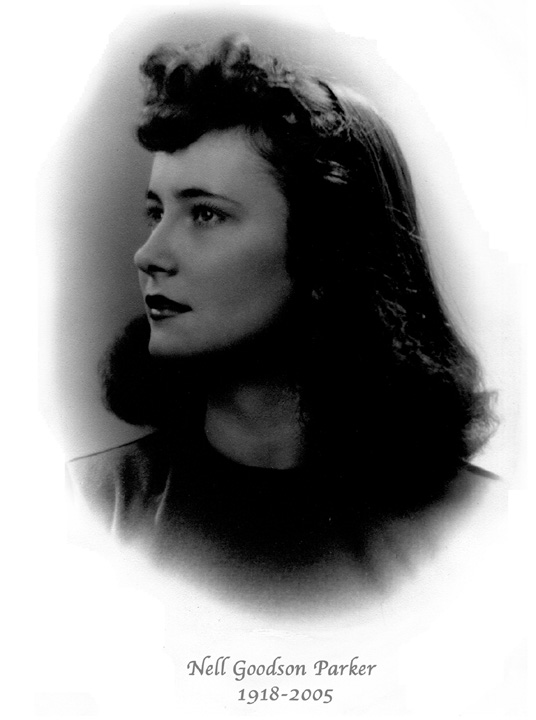
My Mother Was a Bon Vivant

mother.nellWARNING: This is not a story for the faint of heart. If you are the type of person who doesn’t like to read about blood and guts or other things that might depress or upset you, feel free to stop reading right now and go do something else which might be more to your liking.

Okay, my conscience is clear. You may proceed, or not, at your own risk.

One evening about 7 p.m., a little over ten years ago, my wife and I returned home with our two young children from their music lesson in a nearby town as we had done practically every Monday afternoon for several years. The red light on the answering machine on the windowsill in the kitchen was blinking.

I pressed the button to see who had called.

It was my mother.

“Ricky……call me.” was all it said.

My mother was not the type of person who ever called someone just to chat. She was the type of person who only called someone, even her family and friends, when she had a good reason to call them– or in the event she needed something– and she was by no means a needy person.

My father, to whom she had been married for sixty years, and when asked about it on their anniversary, she had responded by saying that, “it seemed LONGER somehow….”  had died five years earlier. Following his death, she had continued to live independently and on her own in the same house where she had lived since she was eleven years old.

So I called her. ‘Hi, Mother,” I said. “What’s going on…?”

“Ricky, I’m dying…” she told me, as calmly as if she were telling me it was raining.

My mother was also the type of person who was not much given to hyperbole.

“Mother, don’t say that” I responded, quite taken aback by her startling revelation.

What do you mean you’re dying…?”

“I’m dying….” she repeated calmly and then asked, “Can you come down here?”

“Yes, of course, Mother. I’ll get down there as soon as I can.”

She hung up the phone without saying another word. And, as things turned out, those would be the last words she ever said to me.

Down there” was Savannah, Georgia, approximately 914 miles from New Jersey where I had been living with my wife and two children since having moved out of New York City eight years earlier.

My wife was by now standing by my side in the kitchen, wondering what was happening as I called up the nice lady who lived across the street from my mother, who was not as old as my mother, and whose own husband had died a couple of years earlier and she had kindly taken it upon herself to check on my mother from time to time. She agreed that she would drive my mother to the Emergency Room of the local hospital while I quickly looked into the possibility of catching a flight to Savannah from nearby Newark Airport to be by my mother’s side.

Unfortunately, the last flight to Savannah was leaving in a matter of minutes and so it was decided that the whole family would drive straight down to Savannah the following morning.

About three o’clock in the morning, I got a call from my mother’s doctor.

(This might be a good place to stop reading.)

Her doctor told me that a blood vessel in my mother’s stomach had burst and that her stomach had filled up with blood and that she had “drowned on her own blood.”

My mother had only been assigned to a room with another person a few hours earlier, having spent the previous four hours seated in the waiting room of the hospital with the neighbor across the street while they processed the various people in the emergency room.

I’m sure the last moments of her life and its aftermath were quite distressing and very unpleasant for her, her roommate, the nurses and the hospital staff.

Although I was not there, I suspect my mother, who always had a healthy disdain for doctors, was quite frustrated and unhappy with all the waiting and delays in her treatment and that, in the immediate aftermath of her death, her ghost, if she indeed had one, (and my mother believed in ghosts) probably looked down at the mortified hospital staff going about their grisly business of cleaning up and of attending to her lifeless corpse–would have said something like, “Good enough for ’em.”

I arrived in Savannah a couple of days later.

Being an only child with two deceased parents, I asked a close childhood friend to accompany me to the funeral home to make the arrangements. We were greeted sympathetically in the lobby by a man who introduced himself as ‘Val‘, and invited us into a small office where he asked me a series of questions about my mother as he jotted down my answers on a form. After I gave him her full name and date of birth, he then asked me,

“What was your mother’s occupation?”

For some reason, my mind went blank.

I sat there completely speechless for a moment. I was at a total loss for an answer.

“She was my mother!” I thought, but of course, I knew that wasn’t the answer he was looking for.

So I thought for a minute. Then said, “… Bon Vivant….” 

After the funeral, I was talking to an old childhood friend. We had drifted apart over the years, but had grown up as boys together and he knew my mother quite well.

I told him about the question the funeral director had asked me.

“What do you think I told him?”, I asked.

He thought for a minute and then said, “Bon Vivant”.

A Time Machine

It was the Spring of Sixty-nine, and the azaleas between the tall palms lining Victory Drive were just opening their pink eyes.

It was a time for new beginnings.

I had only just gotten out of the army a week before, and knowing no one in Savannah my own age and having no new friends, and few old ones, if any, and with nothing better to do, and little money in my pocket, I was hitchhiking to the beach when I first saw her.

I was young, and she was old, even then, yet curiously, we were both the same age.

She was dark green, almost black– and as the story was told, she had languished in an old wooden barn in Pooler, “Georgie” with a cracked block ever since the Winter of ’48 when a hard freeze took Georgia by storm.

The old farmer who bought her had saved up his money, five and ten dollars at a time, and finally had enough in 1941, but then his wife died and the war came and his boys all went away and four years later they all came back, all but one, and that year, right before Christmas, the farmer just went out and bought himself a new truck.

And then, in ’48, that same winter that the pipes froze and the block cracked, he caught a chill, and took sick, and then he, himself, up and died before he could fix her and so he never got to do much more than drive her back and forth to the Faith Bible Baptist Church in Pooler, a few dozen Sundays.  He always smiled and waved and sometimes tooted the horn at the  lady with the blue hair who sat on her porch or hung clothes on the line in the yard and looked up but never waved.  Having finally decided to wave back, she kept looking for him every Sunday for about a year, but of course, having died that cold winter, he never drove past again and then her house caught fire and burned and she moved away never quite knowing what happened, but often thinking of what might have been or what could have been with that smiling tooting waving farmer in the straw hat –and his dark green truck.

A Splendid American

I had been lettering comic books for Marvel for about eight years when I chanced upon a copy of Harvey Pekar’s American Splendor comic book in a neighborhood bookstore in 1985. For the uninitiated, Harvey Pekar was a file clerk working for the Veteran’s Administration who wrote stories about the details of his own life and had various artists illustrate them.

“Of course!,”I thought. “Comics can be about REAL people and their lives….comics stories don’t have to be just about the antics of costumed characters with super powers…..one day I’d like to do a comic like this.”
 
I didn’t think any more about Harvey Pekar or his autobiographical comic book until a year or two later, when I was up late,  as usual, lettering The Spectacular Spider-Man, while watching the David Letterman Show. Then this guy Harvey Pekar suddenly comes on as one of the guests.
“It’s that guy who does that comic book about his mundane life”, I thought. “….this should be interesting.”
 
Apparently, Harvey Pekar had been on the show several times before and was even a popular guest, and a favorite of Letterman, but this time, perhaps in an attempt to spice things up, Pekar “baited” Letterman, accusing him of “…looking like a schill for General Electric“–one of the sponsors of the show. Letterman lost his cool and became incensed. Then David Letterman tried to make Pekar look like a fool, even ridiculed his work and the medium of comic books in general. He referred derisively to Pekar’s comic as “Rainy Day Fun for Boys and Girls”, which I thought was a pretty good tagline.
Up to that point, I liked David Letterman and watched his show almost every night as I worked, but now I was bothered by the way Letterman turned on Pekar and attempted to turn the studio audience against him, too.
l will admit, I didn’t pay much attention to American Splendor after that. I wasn’t following trends in comics closely at the time, just working on them to make ends meet, while pursuing my fine arts career.
Time passed– and eventually, after 15 years with Marvel Entertainment, I found myself the artist of a hit comic book for them.
In 1994, I was even a “Guest of Honor” at The Chicago Comic Con. After many years of slaving away, I was beginning to feel pretty good about my prospects for success in the field.
 Thousands of people were lining up to get a sketch or my autograph on Beavis and Butt-Head Comic Book. Taking a break from my table to walk around a bit and stretch my legs, I happened to pass a panel discussion that was just breaking up when I recognized Harvey Pekar, still seated in the audience, and looking rather dejected as most of the crowd was getting up to leave.
I had never met the man, and feeling somewhat emboldened by my recent success, I swaggered over and introduced myself. The very first thing he wanted to know was how my comic book was selling. I told him the first two issues had sold nearly a million copies combined.
“I wish I could get my books to sell like that,” he mused. 
 
I confided in him that I thought his “Slice of Life” comic books were more to my taste than anything else I was working on regularly.
I was secretly hoping he would ask me to draw a story for him. I was no Robert Crumb, but I felt like I could do a good job on it.
Because of my own somewhat reticent nature, I didn’t feel comfortable just coming right out and asking Harvey Pekar to give me one of his stories to illustrate. In those days, I was not at all “pro-active” in fact, I was the type of artist (and person) who always seemed to wait until someone would ask me to do something. To suggest to him that he hire me seemed presumptuous and even rude, somehow.
Boy was I naive.
Many years later, after I hadn’t had any comics work published in what seemed like ages, I was at home doing the laundry or perhaps taking out the trash when the telephone rang.
It was Dean Haspiel calling.
I knew Dean Haspiel as an up-and-coming young artist who had recently been collaborating with Mr. Pekar on a series for DC Comics. I thought it was great that the publisher of Superman was now publishing autobiographical stories. Having not much of an affinity for superheroes, I thought it boded well for people like me.
Months earlier, I had seen the two of them autographing comics together at the New York Comic Con, and thought Dino! did a great job, as I thumbed through an issue of one of their comic books, I couldn’t help being a little bit envious of Dino!
I secretly wished that Harvey Pekar had asked me to work with him.
Now I couldn’t imagine why Dean Haspiel was calling me.
Dean explained to me that he had spear-headed some kind of a writing contest revolving around cartoonists doing stories about “Next Door Neighbors” and that Harvey Pekar had been the judge. Harvey chose a story by a newcomer, Michelle Carlo entitled, “Night of the Black Chrysanthenum”, about her childhood growing up in The Bronx.
Her “prize” was that her story would get made into an eight-pager by a “professional artist”. Dino! was pretty busy and wanted to know if I might be interested in doing it. He apologized that they could only pay $85 dollars. I thought he meant per page! My page rate at Marvel for penciling, inking and lettering combined had been over $300 per page but I was very anxious to get back into comics work and so I readily agreed to do it and spent three weeks drawing and coloring it.
Dino! liked my work on the story well enough to introduce me to a bright young fellow named Jeff Newelt, the editor for Smith Magazine, an online comics anthology created by Dean Haspiel featuring the work of a band of hotshot comics creators in and around Brooklyn.
Jeff was putting together a team of artists to illustrate new stories by Harvey Pekar and get them on the Smith Magazine website. Of course I jumped at the chance. Who wouldn’t?
Meanwhile, at 62, I had been going to Cardiac Rehab and had become friendly with another one of the patients there while we all walked on parallel treadmills and chatted. When he found out I was an artist, he kindly offered to introduce me to his daughter who owned an art gallery in Cleveland, Ohio. I pretended to be interested, but deep down, in my heart of hearts, and being a bit of a snob, what I really wanted, was to be affiliated with a New York Art Gallery—what artist doesn’t? After all, time was running out! I could die at any minute! I needed to get my work out there while there was still time!! But no New York galleries had called since 1987, when I stopped making fine art and shifted the emphasis of my work to cartooning.
After a few months had gone by, and many miles on the treadmill,  I had drawn several stories for Harvey that were now online when I suddenly remembered the offer the man in Cardiac Rehab had made. Maybe his daughter would be interested in showing my drawings in her art gallery in Cleveland!
I ran the idea past Jeff Newelt who was the editor of all the stories.  He wisely suggested that all four of the artists involved in what was now being called The Pekar Proiject be included– not just me–and that the show could be timed to coincide with Harvey Pekar’s 70th Birthday on October 8, 2009.
I felt selfish and stupid for not immediately thinking of the other artists involved. But it wasn’t the first time I ever felt that way and I knew it probably wouldn’t be the last.
I called the lady art dealer in Cleveland and she arranged the exhibit.
In October, we all piled in my old car and drove to Cleveland for the weekend.
Jeff Newelt, who it turns out is quite a Public Relations and Promotional genius and seemes to know everyone in the entertainment world on both coasts, also made arrangements for Harvey– and the artists in The Pekar Project to be interviewed in Cleveland by a documentary film company at the home of Tara Seibel, one of the four artists involved. The other two artists were Joseph Remnant and Sean Pryor, two incredibly talented and very nice young men.
I was elated to be back working in comics again and to be making connections with a younger generation of cartoonists. I was enjoying thinking of myself as some kind of bridge between the old guard and the young Turks now coming into the field.
It was snowing on the day we all assembled to be interviewed at The Seibel House. Harvey and his wife Joyce were the last to arrive. I hadn’t seen Harvey Pekar in 15 years, and he seemed subdued and in a reflective mood upon arrival. It seems he had good reasons to be uncomfortable. Harvey always seemed uncomfortable, I concluded, as I spent more and more time observing him.
Introductions were made and seemed somewhat strained. In short order, everyone found places to sit around the house or hung around the kitchen nibbling at a large and sumptuous table of goodies. The Seibels were good hosts and had a lovely home.
Meanwhile, in another room, filming and interviewing began.  Almost as soon as he arrived, Harvey sat apart from everyone else on a sofa in the living room waiting to be called in to be interviewed. At first he seemed depressed, but soon his demeanor turned to one of delight as he played with The Seibel’s one-year-old toddler who was seated on the floor with a firetruck. Harvey and his wife Joyce had adopted a child and from all reports, he relished his role as a Dad.
When Harvey had first seen the boy he was drawn over to him like a magnet. Clearly, the two of them had met before and Harvey, who was normally very subdued and had acted somewhat pained upon arrival now seemed genuinely happy as he played with the boy, totally oblivious to all the activity and energy that swirled around him.
And the boy seemed to regard Harvey as some kind of Fairy Grandfather or magical wizard even, and while I watched, Harvey Pekar seemed happily lost in play with the boy and the firetruck and succeeded in escaping the pain of his former life and all its trials which he wore heavily on himself day and night like a heavy and old wornout overcoat.
One by one, we were summoned unpredictibly to the other room, it seemed to me as if to an execution, where the lights and the cameras were rolling. When it was thankfully at last, my turn, my only goal was to try and not say anything stupid as I knew that one day, someone I knew would see it.
In December of that year, Harvey flew to New York and then came by train from New York to New Jersey to speak to a group of excited college students at Drew University. And then took the train back to Brooklyn the next day for a convention where he was fawned over and photographed and posed with and honored –and perhaps even starting to believe for a few days anyway, that there was a whole new generation of comics creators who revered him.
And there was.
And then Harvey Pekar returned by airplane to Cleveland, Ohio where he had always lived, and to the life that he had there.
In August of the following year, he was found dead on the floor of his bedroom— a reluctant, unwilling and unwitting victim of a fatal combination of the very same medications he was taking to sustain him.
He would have smiled at the irony.

My Ex

I found out today by email that my ex-wife died six months ago. She was 63.

There was a message in my inbox from her husband, whom I had never met. She and I had divorced 25 years ago and even though I hadn’t spoken to her in over ten years, I was nevertheless saddened upon learning of her death.

She was a troubled soul who grew up in a housing project on the Lower East Side, never knowing who her father was. Her mother handed her off to her grandmother in the hospital shortly after she was born and only visted her sporadically, often dragging her around and entrusting her to strangers and exposing her to situations and places where children should never be. Great harm was done to her as a child.

She was raised by her grandmother and was a latchkey kid before they had a term for it. She would come home after school to an empty apartment on the 13th floor to find dinner waiting for her on the kitchen table. Dinner consisted of a can of tuna fish and a can opener. Her grandmother was still at work in a sweatshop nearby sewing the eyes on stuffed toys.

One day, when she was about 12, she came home from school to find the police at her apartment. They were looking for her mother. They wanted to question her in connection with the death of a much older man who was found dead in his apartment in another part of town. The police had been informed that her mother had been seen with the man and was seen leaving the apartment in the company of another man later that day. The grandmother told the police that her daughter did not live there and that she had no idea where she was. They searched the apartment anyway, to no avail.

After the police left, the grandmother’s daughter stepped back into a bedroom through the open window of the thirteenth floor. She had been standing on the ledge outside the window while the police were inside looking for her.

My ex was 26 when we met and I was 31. She seemed exotic and exciting and struck me as someone who knew how to enjoy herself– and maybe, someone from whom I could learn how to enjoy myself, too. Life is supposed to be enjoyable. At least, that’s what someone once told me.

I was a committed artist, and derived a great deal of satisfaction from that, but still, somehow, I could not overcome the nagging feeling that I was missing something. There was an emptiness inside. I wasn’t sure what it was.

I didn’t have many friends growing up and most of those relationships were problematical.

In the ten years we were married, I learned an important lesson about myself. I am not a fun person. Fun is not something that floats my boat. Fun is something that other people have. I’m okay with that and happy for them. I have my priorities.

When we were first together, I made a list of what I thought were “potential problems” in the relationship. When we split up and I was gathering some of my belongings, I ran across that piece of paper. Every single item on that list had come true.

I learned a few things in that relationship. No one can do for you what you should do for yourself. Never try to “save someone” or make up for all the bad that has ever happened to them. Never surrender who you are at your core in an attempt to please someone else. Never marry someone who is not interested in your creative work. And there is a lot more to happiness than money and possessions.

When you are unhappily married to someone for many years, a part of you gets very, very sick. And when that person  dies, a little part of you dies with them.

A little part of me died with her. But it wasn’t a very big part, I don’t think.

May it– and may she– rest in peace.

Incident in CVS

Screen Shot 2015-05-01 at 9.39.01 PMNow that I am a senior citizen with PTSD/FWIC (Post Traumatic Stress Disorder from Working in Comics) I have a laundry list of medications that I take on a daily basis. These medications require me to make monthly, weekly or sometimes daily visits to one pharmacy or another depending on where I happen to be living when I run out of pills.

If this alone were not enough, my wife and two children have an impressive variety of chronic illnesses and assorted maladies which make me a regular presence in several pharmacies.

Today I went into the CVS pharmacy in New Jersey where over the years I have developed a reputation as a gregarious, very upbeat, friendly, unperturbable older guy with infinite patience. It’s no exaggerration to say that the people that work in the pharmacy literally brighten-up when I come in.

Helen, an African American woman with a fourteen year-old daughter has all five of my Papercutz Slices parodies.  Omar the pharmacist, who is normally a very reserved, very conservative young man of Middle-Eastern origin gets just the slightest hint of a smile on his face when he sees me on the other side of the counter. Indeed, there are even several others there who know me by name.

Usually, I find a terribly long line at the pharmacy, but while others may find this a minor inconvenience, I am not deterred in the least, as I am my own “boss” and if the employees should deign to apologize for the long wait, I am gracious and proudly declare to them I have “no more important place to be”. I actually enjoy making funny comments and interacting with people in line under the right circumstances–and even the wrong circumstances as happened to be the case today.

As I entered the store and walked past the crowd gathered at the registers in the front of the store and ran the gauntlet between the candy aisles, I was delighted to see that for once, there was no one in front of me in line at the pharmacy in the back of the store.

I stepped right up and said in my ususal jovial manner to the five or so employees busily engaged behind the counter, “Hi! How is everyone doing today?”

I’m old enough now that I’m just considered a little eccentric and not much of a threat.

Helen looked up and said with a smile, “Hi, Mr. Parker….”

When Omar, who I can only see from the chest up (because he works behind yet another counter) heard the name Mr. Parker, he, too glanced up— and I thought I detected the faint trace of a smile on his countenance. I felt acknowledged, important, appreciated–a valued customer!

I approached the young African American male standing behind the register. “Hi, I’m picking up a prescription for Richard Parker,” I announced in my warm baritone radio-announcer voice.

“Date of Birth….”, he asked, punching a few buttons on some electronic device.

Eight, thirty-one-forty-six”, I proudly responded, happy to be able to answer someone’s question with certainty in an increasingly uncertain world.

Just then– and from somewhere behind me, and off to the right, a woman approached and slapped an empty orange prescription pill bottle down on the counter beside me. “I’ll need to get this refilled,” she said abruptly, and then sauntered off to do some shopping in the store.

Suddenly, I was transformed into the cranky, slightly mentally-unhinged person who now seemed perfectly aligned with my dirty dissheveled physical appearance ocassioned by all the backbreaking work I have been engaged in as of late as I struggle alone to move all of our possessions from one place to another as our house undergoes a month-long cosmetic restoration.

“Hey–!! Wait your TURN, lady!!,” I said, looking into the big brown surprised eyes of the store clerk and not even bothering to turn around to face the woman. Then in a softer voice, I addressed the clerk. “Don’t you wish you could talk to  customers like that….?” He smiled a big smile. I could tell he was starting to like me, too.

Then, from somewhere behind me, I heard a voice. “I’m not bothering you,” she said.
“Oh, yes, you are—-you just don’t realize it…” I responded, again, without even bothering to turn around and look in her direction.

The bemused pharmacy clerk finished processing my payment and handed me my pills.

The little orange bottle the lady had deposited a minute or two before was still on the counter beside me, so I took that one, too, and headed straight for the door.

I gave her a fake smile as I angled past her in the Analgesic Aisle. And ten seconds later, I tossed her empty pill bottle into a vacant spot behind the Dove Bars about halfway out the store. Then suddenly I heard my name being announced on the store intercom. “Mr. Parker, Mr. Parker….please come to the register in the pharmacy…”.

I turned around and headed back to find her standing there, next to the store clerk. Omar, the pharmacist, had come around from his ususal place behind the second counter and was now speaking directly to me. “Mr. Parker, I think you took her bottle by mistake….” (I think he was trying to let me off the hook)

“Oh–!, I said….”I’ll be right back….”

As I turned around to go back to the candy section and retrieve her empty pill bottle from behind the chocolate, she spoke again. “I need that pill bottle!!

This time I stopped in my tracks then slowly turned around and looked into her pale blue watery eyes.  “I said, I’ll be right back…..”

I retrieved the bottle and walking past the Pepto Bismal®, I glanced down at her name on the label.

“Harriet”

I walked up to her and handed it to her. “Here you are, Harriett,” I said in a matter- of- fact voice, as if nothing at all had happened.

Then I turned and I walked out of the store, again passing the candy section, passing the women and children waiting in line in the front, passing the old guy walking in on a cane and walked to my car and got in.

I started the engine and just momentarily toyed with the idea of waiting until she exited the store and walked through the paking lot to her car. For just a moment, I fantasized  that I would run over her. In my mind I heard the dull thump of her body against the hood of my SUV as she was lifted through the air and uncerimoniously deposited on the hood of my car, her face dazed as it stared unseeing at me through the cracked windshield….

But then I popped open my little bottle of pills, took one and happily drove away.

FOR SALE BY OWNER

scaffoldThe dreaded day had finally come as I always knew it would.

I reluctantly went out the back door and walked slowly toward the garage in search of some scrap wood from which to fashion a sign announcing that our home of the last 18 years was “FOR SALE BY OWNER”.

I had salvaged the wood from a barn-red picnic table a neighbor had thrown out many years earlier. I loved the color, and it was free, so, naturally, being an ex-New York “Dumpster-Diver”, I dragged it home and it was in our backyard for a few years until it had fallen apart a second time and had rotted to just beyond my ability to repair it, and thus became just a few old boards in my garage.

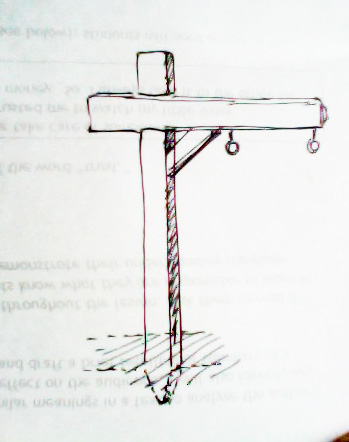
I located two that seemed long enough for what I had in mind, which was to build a scaffolding from which to hang a FOR SALE sign.

By coincidence, the nice family who has lived in the house across the street from us for the past ten years, were now selling their house and moving, but not to a one bedroom apartment, but to an even larger house in an even nicer part of town.

Roger is a young man on his way up, and as I thought of him and his seemingly bright future, I tried hard not to think of myself as an old man on the way out, which is what I suspected I must look like, based on the pitiful look on the face of a passing teenager speeding by me in a red car, as I worked.

Having never built this type of sign before, I grabbed a pencil and a piece of paper with which to make a rudimentary design before doing any cutting. “Measure twice and cut once” I remember an old man telling me once when I lived in New York. Good advice, especially since I only had two old boards and I wasn’t sure if they were going to be long enough.

I looked over at the neighbor’s sign across the street and tried to make mine look like his.

I measured the length of the horizontal arm from which the sign would hang and estimated the height of the vertical piece which would be driven into the ground to support it. I cut one end into a point using a saw in my basement which had belonged to my great grandfather who had been a cavalryman in the Civil War. I went inside and got an aluminum ladder from behind the door in the laundry room and stood on it, and, using the sledgehammer that I had inherited from my father, I pounded that former slat of a picnic bench till it was about a foot deep in the ground in the center of our front yard.

In the end, though, the sign of the neighbor across the street suggested the signpost of a pub on some stately street in 18th Century Philadelphia, while mine suggested nothing so much as a gallows– or even worse, a pistol pointing at my house. Painting it white helped a little, but not much.

My next-door neighbor of the last 18 years watched all this from his yard for thirty minutes or so, as he was blowing leaves, but said nothing.

Our relationship had gotten off to a bad start the day I moved in in 1997. It had been raining for the previous three days and the ground was very wet.  The rear wheel of our moving truck ran over a corner of his grass next to my driveway and left a terrible impression on his grass and an even worse one on the trajectory of our relationship. Our friendship over the years can be described as cordial at best– and though he has never come right out and told me so–he is far too nice of a guy to do that– I have always suspected that he secretly thought of me as some kind of nut, when he thought of me at all.

But, I have no doubt that when we say our last goodbye, it will be on good terms. All in all, he has been a pretty good sport considering what it must be like to live next door to a guy like me–one who rakes his leaves only when the last one has fallen and mows his grass only when it makes it absolutely necessary in order to gain entrance to one’s abode.

Over the last couple of decades, my wife and I have enjoyed living in this neighborhood. We have watched neighbors who have become friends come and go. We have had their children in our house and in our yard and our children have played in their yards and eaten dinner in their houses. Some neighbors you get along with great– and others you just get along with until eventually you– or they– just get along.

My intention is to buy this neighbor who I suspect thinks I’m “nuts” a bottle of champagne, which I fully hope that he and his lovely wife, will crack open and drink a toast in celebration of the minute my car backs out my driveway, rolls down the hill and turns right and I disappear from their lives forever and become nothing more to them than a fading memory or a passing topic of conversation during televison commercials.

I’m counting on that bottle of champagne to make it all better– to heal old wounds. “Champagne has powers of healing”, my Mother once told me.

I sure hope so.

On second thought, I’d better make it a case.

Getting Out

Screen Shot 2015-03-27 at 10.43.34 AMIn a way, it seems like only yesterday, but in reality, it was 16,425 yesterdays when I got out of the army. I had a vague idea that I wanted to go back to college and study art, but I wasn’t sure where, exactly, and, at any rate, I was in no particular hurry. I thought after three years, one month and five days in the army, I deserved to grow my hair long and not shave and maybe even do something a little wild and crazy. At least for a while.

I was leaving my old life in Lawton, Oklahoma behind– saying goodbye to Joe and Jewel, the nice old childless farm couple who had rented me a room in their house for a dollar a day and fed me breakfast on Sunday mornings and then drove me to a little Baptist church in Lawton, Oklahoma in a vain attempt to save my immortal soul.

I was leaving all that and driving into my new life in California.

I packed my ‘62 Chevy with what few belongings I had, not much more than a suitcase full of civilian clothes. I was headed West, to The Haight, in San Francisco, where I knew absolutely no one, and liked it that way. I was young and foolish, with money in my pocket.

A bad combination.

The only thing I knew about San Francisco was what I had heard in a song: That it was full of “gentle people with flowers in their hair”, free spirits and free love. That sounded like as good a place as any, and probably better than most, to restart my life.

On a trailer made by a big, strong, tough Native American in Marfa, Texas, from a truck bumper and the front axle and spoke wheels of a Model A Ford, I towed a 1967 Triumph motorcycle. I imagined it would be fun to ride on the steep hills in “Frisco”. It was two o’clock, on a nice Spring afternoon, with a clear blue sky and I was feeling good about my prospects for the future.

As I was saying goodbye and thanking Joe and Jewel, who had treated me like their son, and whom I knew I would never see again, their phone rang.

It was another serviceman, an enlisted man I had only known for a couple of months. It seems that he and his wife had decided to split up and he wanted to know whether, “since I was headed to California, anyway, did I have room in my car for his wife, Bunny, and their one-month old baby.” I don’t recall that he explained it, exactly, but presumably they knew someone there and she and the baby would be able to stay with them. The whole situation seemed kind of weird, and so sad, that I didn’t think I could say no.

Twenty minutes later, he arrived at the house, and after a tearful goodbye, she and the baby got out of his car and into mine. Once again, he expressed his appreciation as I impatiently listened and tried to look sympathetic. But, after thirty-seven months in the service, I had finally become a free man and all I really wanted to do was get the Hell out of Dodge.

His wife and the baby were on the front seat of my car. My new freedom had lasted only the twenty minutes it took him to drive to my place.

I drove to the corner, turned left, passed the big open field with the gently-rolling hills, where I used to jump my motorcycle, while pretending to be Steve McQueen, tuned left again, and headed west with a young woman and a month-old baby riding shotgun. There wasn’t much conversation. What could I say? It didn’t seem right to be asking her too many questions.

In only a few minutes I had left behind forever, the army, Joe and Jewel, their little dog, Pepper, the Baptist Church, and the gas stations and cheap motels on the outskirts of town.

We were driving due west on Highway 62, at a steady 55 on a two-lane road with the setting sun streaming in through the front windshield.

I looked over at Bunny.

Her face was turned away. The yellow-orange sunlight momentarily caught a tear as it rolled down her cheek and dropped into the purple shadows on her baby’s forehead.

To lighten the pall, I turned on the radio right smack-dab in the middle of a sad Country and Western song about a train. Bunny began sobbing quietly.

I turned the radio back off.

We drove on for another twenty-five or thirty miles all three of us lost in our own thoughts.

There wasn’t much traffic on the road. I looked over at her again. At least she had stopped crying. I felt bad for this young woman, who was going away with nothing but a small suitcase and an even smaller baby. I felt bad for her little baby, who would now have to grow up without a father. I felt bad for my friend who was going to have to soldier on in life without his wife and child. I didn’t know how I could make the situation better. I really didn’t think there was anything I could do about it. So I just kept driving and tried not to think about it. But that was impossible.

It was beginning to get dark. I saw a gas station up ahead on the right. I checked the gas gauge. It was down to a quarter of a tank. I pulled in, got out, got the key to the restroom from the attendant, asked him to fill it up, and went into the bathroom, leaving Bunny and the baby sitting on the red vinyl front seat of my car.

When I came out of the restroom, after taking my first leak as a civilian, I was surprised to see Bunny standing in the gas station office. She was cradling the baby in her arms and holding the phone out toward me.  She said she had her husband, Don, on the phone.

He wanted to talk to me.

He told me he was “very sorry” but he now realized he had made a “terrible mistake” and would I please “bring her back”.

We had only gone about fifty miles. I readily agreed to his request, relieved that my newfound life, that of an aimless drifter, was now suddenly imbued with purpose and meaning.

I paid the attendant in cash, pulled the car back out onto the highway, did a U-turn and headed back to Lawton.

My Cross To Bear

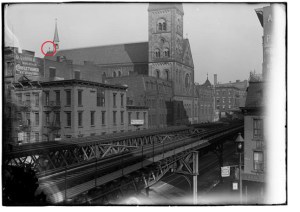
st.alphonsus.cross The little white cardboard signs started appearing in store windows in my neighborhood about 1980.  “SAINT ALPHONSUS CHURCH IS SINKING”, they cried out in big block letters.

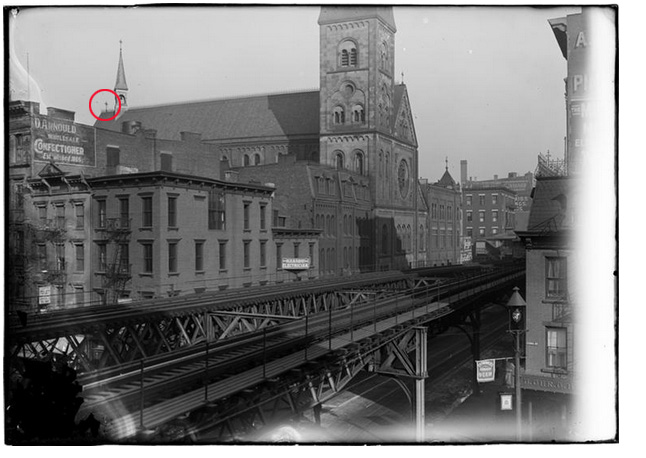
The foundation of the church, which had been built in 1870, to serve German Catholics living in the area, was slowly sinking into a stream-bed near Canal Street. One should not build large buildings atop former drainage canals, even if God is the owner of the property.

Some well-meaning souls wanted to “save the church.” Although I am not a Catholic, nor even a churchgoer, my initial sympathy and natural inclination was to side with those who wanted to try and save the church.

When I first moved to the neighborhood in the Summer of 1975, naturally, I walked around, exploring, as anyone new to the area would do and my explorations that day took me inside the church.

It was by far the oldest and one of the largest buildings in the surrounding area. It did not have what I would call a large congregation. Mostly, it served the elderly Irish and Italian Catholics, a dwindling number of whom still lived in the tenements in the “South Village” as that area of New York City was called at the time. Many of those  faithful ones had themselves been baptized there or married there– and attended the funerals of their relatives and friends there.

It was a tired old church, with faded paint in the vestibule, that looked as if it had not been re-painted since before World War One. Here and there were handsome wooden staircases leading to the refectory or perhaps to the bell tower. The dark wooden steps were worn down quite smooth in places from generations of bell ringers and congregants who preferred the less-crowded confines of the balcony to the main floor. There was also a huge organ, but I think it may have fallen into disrepair long before I arrived. At any rate, I don’t remember ever hearing it.

Tuesday, July 1, 1975, the very first day I began living at 46 Grand Street, between Thompson and West Broadway, nearly in the church’s shadow, I quickly discovered one of the unexpected surprises of my new home was that it came with free church bells announcing each day’s noon–and Mass on Sundays and much beautiful ringing and clanging at other times as well.

Every day was a celebration in my first New York City Studio.

The bell ringing was often in concert with a great cacophony of banging and hammering which emanated from John DeLorenzo & Son Iron and Sheet Metal directly across the street from my storefront studio. There was also another sound that dominated, a loud, impatient buzzing that asserted itself whenever the telephone rang at DeLorenzo’s– and that was often. Apparently, they had discovered that the gentle bell of an ordinary ringing telephone could not be heard over the tumult of the busy metal shop. But after the first few weeks of living there, I never again noticed the banging from across the street. It’s surprising what one can get used to.

But those church bells….one could never get used to them.

One day, about five years later, the bells stopped ringing for good.

In its infinite wisdom, the Roman Catholic Archdiocese of New York determined that the land upon which the church had sat for nearly one hundred and fifty years had become far too valuable of an asset to justify allowing it to remain standing for the handful of the faithful who still prayed for its salvation as well as for their own.

After one hundred and ten years, the House of God was slowly sinking closer to Hell in the streambed beneath thousands of two-inch thick iron plates which had been carefully laid underneath its supporting structure.

By the summer of 1980, The Church of Saint Alphonsus Liguori was an accident waiting to happen and needed to come down, lest the old people still happily playing Bingo in its basement on Monday evenings be granted an early admission to Heaven.

The first thing that happened was that the doors were locked from the inside and a chain laced through the door handles and a company of the unfaithful was hired to handle the salvage operation.

Plaster Madonnas and alabaster angels, wrapped and roped in padded blankets, were hoisted like so much common cargo into the backs of darkened trucks, then bumped along over cobblestone streets through rush hour traffic and down into to the nearby Holland Tunnel and smuggled out of town, not to the heralding of trumpets, but to the honking of horns.

Soon the church, having been stripped of its baptismal font, gilded tracery and choir stalls was nothing more than a dusty and crumbling empty shell.

Echoes of pigeon wings gave mute testimony to all the many prayers which had long ago been uttered in its nave.

A chain was placed through the door handles on the outside.

An insane homeless woman recently liberated by President Regan from her place in mental institution took up residence under the portico in the arcade atop the limestone steps, her incoherent mutterings a strange echo to millions of past prayers.

Soon, all that remained was the large octagonal tiled marble floor and the copper gutters, but soon vandals and scavengers had removed them too.

There was a large wrought iron cross at the apex of the roof on the building’s west end. No doubt, it, too, would have been removed had Thompson Street not been too narrow for the wrecker and crane. The cross had probably been made by a German craftsman on a forge one cold Winter’s day during the Franco Prussian War and transported across the ocean in the hold of a merchant vessel. For the last hundred and ten years it had perched atop the upper story of the nave wall rising above the aisle roof, probably one hundred and fifty feet above the street. Only brave birds dared rest on its outstretched arms.

I was determined to save it.

As the weeks dragged slowly by, what was left of the church became a shooting gallery or more often, a toilet for the homeless and insane.

I tried to forget about the cross, but it wouldn’t let me. Every time I walked my dog Homer down Thompson Street or went into DeRoma’s for a sandwich, there it was, defying me to devise a way to get it.

I suppose I could have waited until they tore the building down, but then there would have been all that rubble to sift through.

Then one day, without telling anyone about my little plan, I slipped on a pair of rubber-soled tennis shoes, took a length of rope and slipped in through the open front door of God’s house. He wasn’t home.

I turned left and began climbing the wooden stairs of the bell tower. After a couple of turns I was on the level of the ceiling of the church, approximately 70 feet above floor level. There were two little steps leading to a small wooden door–not the kind of door one could open and walk through, but more of an access door. On this door was a white porcelain knob and a big keyhole with a solid brass keyhole-shaped cover over it. Holding the length of rope in my left hand, I gripped the doorknob in my right hand and gave it a quarter turn clock-wise. It opened with a satisfying click.

A gust of cool air with the faint scent of rose petals and old candle wax brushed by me.  I swung the door fully open and looked in. What I saw reminded me of nothing so much as the interior of an old barn. There were very large wooden timbers forming the skeleton of the building. The timbers seemed to be evenly spaced about every three feet and they went on and on until they disappeared in the darkness at the far end of the open space. Other timbers soared high overhead forming huge repetitive triangle shapes supporting the slate roof. Leading away from the door and into the darkness were two very long twelve-inch wide boards. They formed a walkway and it led in the direction that I wanted to go. If there were any footprints on those boards, successive deposits of dust upon dust had covered them up long ago.

Rope in hand, I made new footprints.

Stepping off those boards would have meant crashing through the plaster ceiling and certain death on the floor of what had been the nave about 70 feet below.

Sunlight was coming through an opening in the roof about fifty yards in front of me. I went toward the light. There was an old vertical handmade wooden ladder about twenty feet tall leading straight up to where there must have once been a smaller bell tower, but someone had removed the bell and the tower and left a gaping hole about six feet across.

I coiled the rope, put it over my head and shoulders and holding onto the rungs of the old ladder with both hands, up I went. In ten or fifteen seconds, I emerged into the late afternoon air of a fine Spring Day.

The sun was low in the sky over Canal Street and Sixth Avenue. There was no wind.

And then I saw it about twelve feet away.

The iron cross was even more beautiful up close that it was from way down on the street. It was around five feet tall and had been fabricated from inch-and-a quarter square bar stock, which had been heated on a forge and bent in a vice and then hit repeatedly with a hammer while still red hot in order to achieve the desired curve. Then other pieces had been similarly formed, perhaps laid on some kind of drawing to insure the correct shape. When the design was complete, all the various pieces had been joined together with long metal threaded rods and nuts and small spacers had been inserted and the nuts tightened just enough to last an eternity. Then the cross was embedded in a base of solid lead to hold it straight and upright against any wind or storm and once installed, there it stood for a hundred years overlooking both carriage and car.

I very carefully crawled out onto the apex of the roof on my stomach until I could straddle the apex of the roof with my legs. I made a big loop with my rope and tied a slipknot in the rope.

I slung it up and missed the first time.

On the second attempt the rope got a good purchase over the top of the cross. I tugged gently at the rope as if I was trying to hook a large fish until the rope was tight against the iron cross. Then I backwards-shimmied to the opening and backed down the ladder a couple of steps. I tugged on the rope.

The cross did not budge.

It did not want to leave its home. I was going to have to use force. I pulled harder.

Nothing.

Putting the weight of my body on the rope I managed to dislodge the cross and then slowly, with hardly a sound, it toppled over toward me like a drunk with his arms straight out to his sides who was passing out from a standing position.

I was very lucky. If it had fallen the other way, it would have pulled me up through the opening in the roof and over the side of the building and to the sidewalk a hundred feet below. I was very lucky.  Stupid lucky.

I took a couple of deep breaths and tried to pull it closer to me. It was much heavier than I had expected.

Then, suddenly, it began to slide down the roof. I let go of the rope and the cross dropped about fifteen or twenty feet through clear air and crashed through the roof below.

Now it was just hanging there, its horizontal arms balanced on two of the supporting beams of the roof.

I carefully backed down the ladder hand over hand and backtracked along the two board wide wooden pathway to the little door, climbed back through it, descended the stairs to the ground floor, exited through the front door, went down the limestone steps, turned left onto West Broadway and went to look for my friend to help me finish the job.

I knocked on Standish’s door at 32 Thompson Street.

Now it was okay to ask someone for help. If I had asked him for help before, he would have probably told me I was crazy and tried to talk me out of it. But now it was just a matter of getting a tall ladder and getting the cross off the roof of the lower structure, surely two strong men could do that, even if one of them (me) didn’t have any sense. Yes, I needed Standish’s help. This was clearly a two-man job. One to go up the ladder and the other to hold the ladder. And it would have been a shame to get killed or injured trying to do it alone especially now that the hard part was done.

Whenever you accomplish something, especially something difficult, and especially when you have put your own life at risk –but you have somehow miraculously managed to survive, it’s always great to have a friend along with whom you can share your victory.